The Global Building Insulation Materials Market Outlook was valued at more than USD 32.10 Billion in 2025 and is expected to reach a market size of more than USD 43.38 Billion by 2031, expanding at a CAGR of approximately 5.28% from 2026 to 2031.
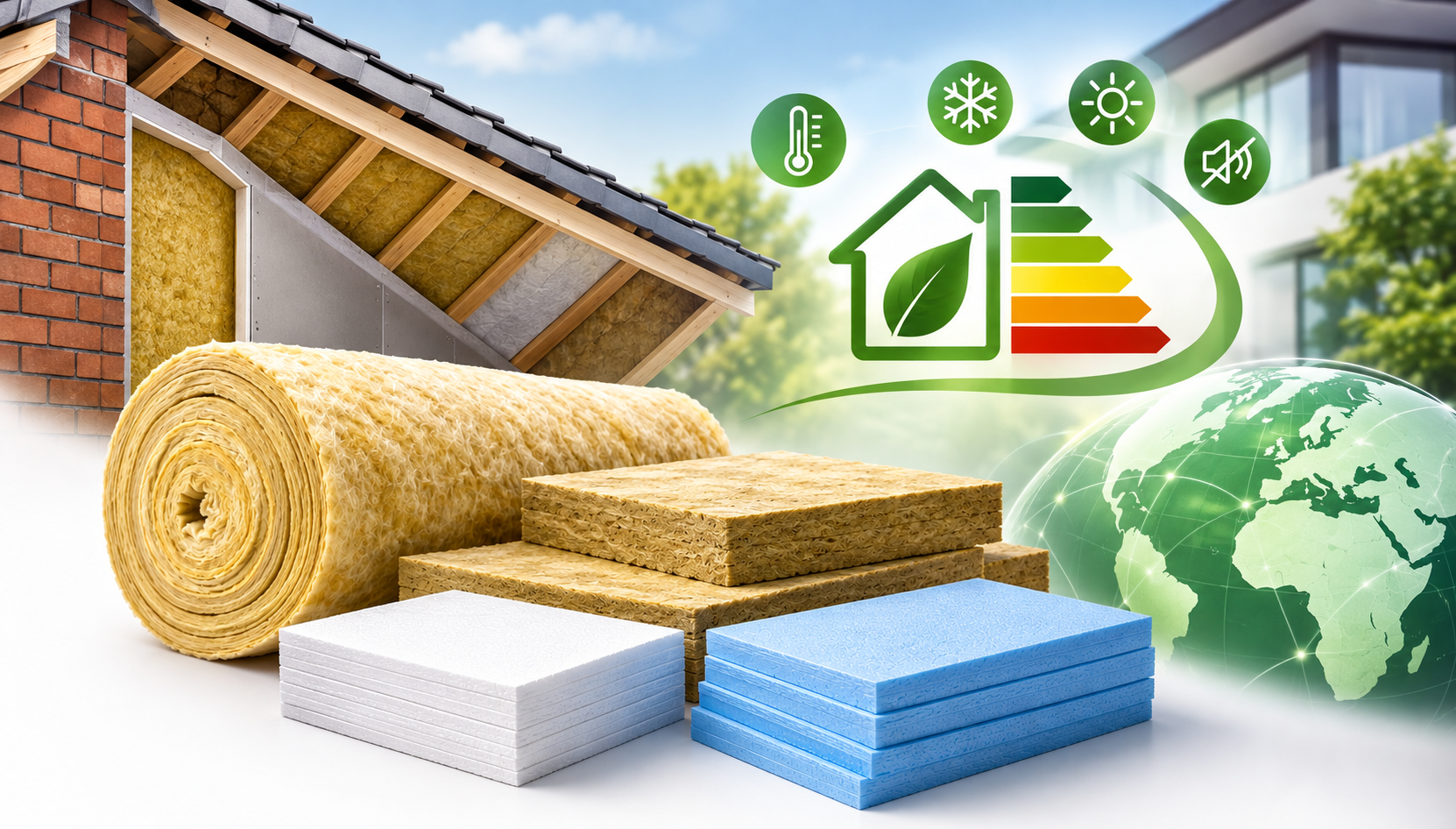
The Global Building Insulation Materials Market is expanding as construction industries increasingly focus on thermal comfort, energy efficiency, and improved building-envelope performance. Insulation materials reduce unwanted heat transfer through walls, roofs, ceilings, and other building components, helping buildings manage heating and cooling requirements more efficiently. Demand varies according to climate, construction methods, building regulations, material costs, and installation practices. Glass wool remains the largest material segment because its flexible formats suit conventional building systems and residential construction. Wall Insulation represents the largest application, while Residential buildings generate the largest demand base. Batt / Blanket is the largest product form, and New Construction remains the largest construction stage globally across building markets.
Glass wool remains the largest material segment across global construction markets
Glass wool maintains its leading position because it combines thermal insulation, acoustic performance, flexibility, availability, and installation familiarity. Batt and blanket products can be installed across wall cavities, ceilings, attics, roofs, and partitions, making the material compatible with widely used residential and commercial construction methods. Established distribution networks support availability across construction markets. Glass wool can be produced in different thicknesses and densities according to thermal requirements and available cavity space. The material is particularly relevant in residential construction, where contractors favor familiar installation methods. Renovation projects also provide opportunities where accessible cavities require improvement. Its broad global application base and established supply infrastructure support continued leadership across the region.
Wall insulation remains the largest application because of its extensive envelope coverage and thermal-performance importance
Wall Insulation represents the largest application because walls form a large portion of exposed building envelopes and influence heat transfer between conditioned interiors and external environments. Effective wall insulation reduces unwanted heat movement and contributes to stable indoor temperatures across heating and cooling climates. Applications include cavity insulation, framed walls, masonry systems, external insulation, and continuous insulation systems. Material selection depends on wall construction, available thickness, thermal requirements, moisture conditions, fire considerations, and installation practices. Glass wool is widely used in conventional framed walls, while EPS and rigid products serve masonry and façade systems. PUR/PIR is selected where higher thermal resistance is needed within restricted thickness. Residential and commercial projects sustain demand.
Residential buildings remain the largest building type because of extensive housing construction and widespread insulation requirements
Residential buildings account for the largest building-type segment because housing construction creates recurring insulation requirements across walls, roofs, ceilings, floors, and components. Detached houses, apartments, townhouses, and multifamily developments require different configurations according to climate, construction method, regulations, available space, and project economics. Thermal insulation directly influences indoor comfort by reducing heat loss in colder environments and limiting heat gain in warmer regions. Glass wool is suitable for conventional residential systems because batt and blanket products can be installed efficiently within standardized cavities. Cost remains important for homeowners and developers, while higher-performance housing creates opportunities for specialized solutions. New construction and existing housing provide a durable global demand base.
Batt / Blanket remains the largest product form because of established construction practices and installation flexibility
Batt / Blanket remains the largest product-form segment because it fits efficiently into standardized construction cavities and established building assemblies. The format is widely used across framed walls, ceilings, attics, roofs, partitions, and other applications where insulation can be positioned between or across structural members. Its flexibility allows installers to accommodate variations in cavity dimensions and work around building services without extensive structural changes. Glass wool represents a major material within this format, supported by established production capacity and contractor familiarity. Different thicknesses and densities address thermal requirements and installation space. Installation generally requires less specialized equipment than spray systems, supporting adoption where speed, labor availability, and cost influence procurement decisions.
New construction remains the largest construction stage as insulation can be integrated efficiently from the beginning
New Construction represents the largest construction-stage segment because insulation can be incorporated into building designs before walls, roofs, ceilings, façades, and finishes restrict access. Architects and contractors can coordinate insulation with framing, windows, air-control layers, moisture-management systems, and envelope components. This allows material thickness and placement to be considered alongside overall building-performance requirements. Residential projects provide demand as insulation is routinely incorporated into walls, ceilings, attics, roofs, and floors during construction. Commercial, institutional, hospitality, and industrial projects contribute through specifications requiring thermal, acoustic, fire, or moisture performance. New construction allows efficient installation and better control of thermal continuity. Renovation remains important, but existing buildings involve restricted access and irregular conditions.
Europe leads the global market through energy-efficiency requirements, renovation activity, and its substantial existing building stock
Europe represents the leading regional market for building insulation materials, supported by established construction standards, energy-efficiency requirements, renovation needs, and an aging building stock. Many European properties were constructed before modern energy-performance expectations, creating opportunities to improve walls, roofs, ceilings, and other envelope components. Northern and Central Europe require protection against winter heat loss, while Southern Europe increasingly needs solutions that reduce summer heat gain and cooling requirements. Glass wool, mineral wool, EPS, and rigid insulation products are widely used across construction systems, while PUR/PIR serves applications requiring higher thermal resistance within limited thickness. Germany, France, the United Kingdom, Italy, Spain, and Nordic markets provide significant demand across the region.







 We are friendly and approachable, give us a call.