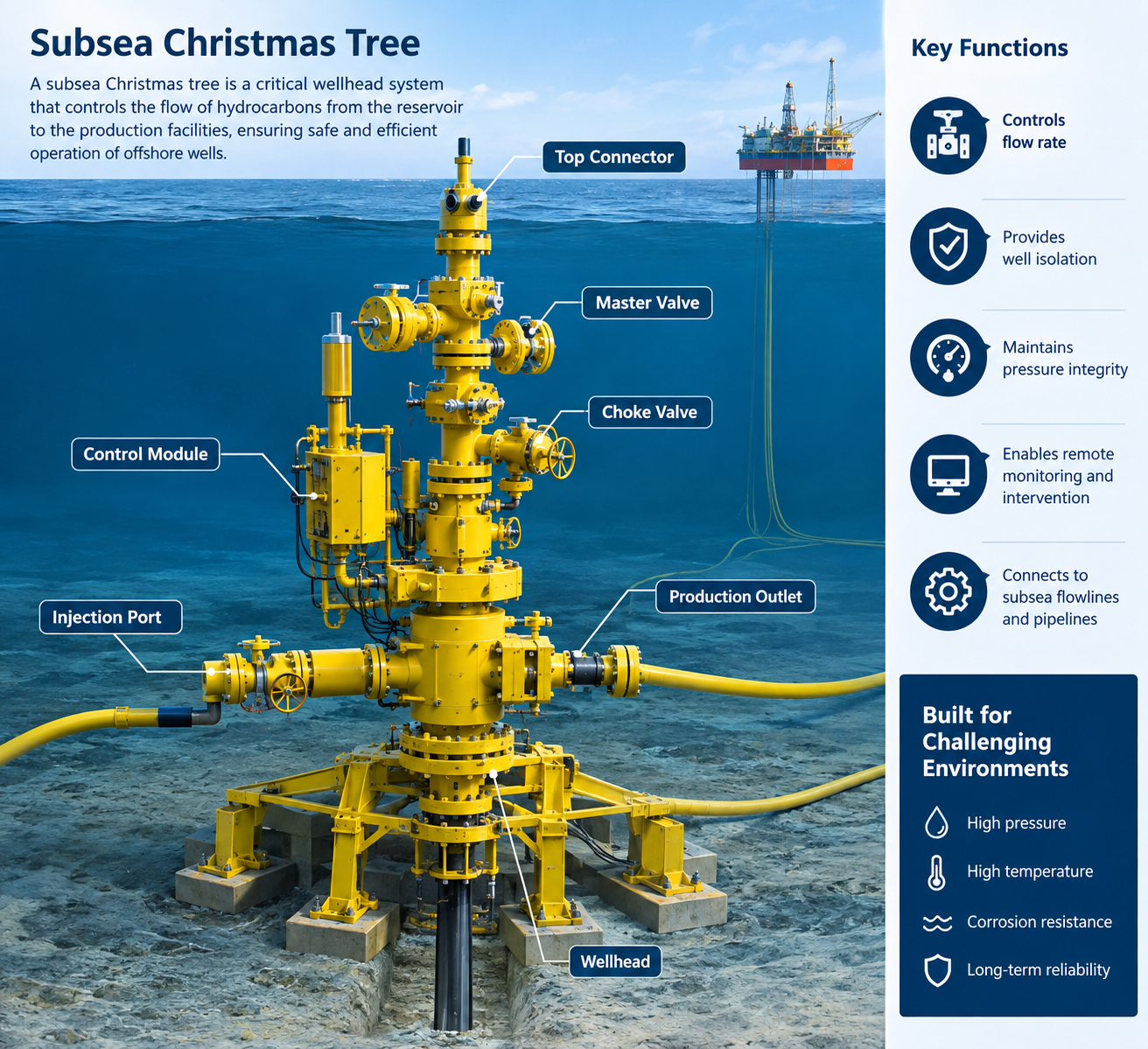
The Global Christmas Tree Equipment Market is entering a new phase as oil and gas operators increasingly prioritize standardization, digitalization, faster project execution, and lifecycle efficiency. One of the most significant trends emerging across the industry is the movement from highly customized Christmas tree designs toward standardized equipment specifications. This transition is particularly important for offshore and subsea developments, where equipment complexity, procurement lead times, installation costs, and intervention requirements can have a major influence on project economics.
According to the research report "Global Christmas Tree Equipment Market Outlook, 2031," published by Bonafide Research, the Global Christmas Tree Equipment market was valued at more than USD 6.37 Billion in 2025, and expected to reach a market size of more than USD 8.86 Billion by 2031 with the CAGR of 5.80% from 2026-2031.
A major industry development is the increasing adoption of IOGP JIP33 standardization. IOGP S-561 establishes supplementary procurement requirements for subsea trees based on API Specification 17D, creating greater consistency between operators, engineering contractors, and equipment manufacturers. Standardized specifications can reduce technical duplication, simplify procurement, and improve consistency across projects while maintaining requirements for safety, quality, and equipment performance.
The trend is also closely connected with digital transformation across the oil and gas supply chain. Standardized technical specifications and equipment information make it easier to integrate Christmas tree data into engineering, procurement, asset-management, maintenance, and operational systems. This creates opportunities for better equipment traceability, digital documentation, remote monitoring, predictive maintenance, and more efficient lifecycle management.
Subsea development is providing an especially strong platform for this transformation. Offshore operators increasingly need equipment that can be configured for different field architectures while minimizing installation and intervention requirements. Standardized vertical and horizontal subsea tree designs can support repeatable project execution and help operators leverage existing subsea infrastructure for additional wells and tieback developments.
Pressure and environmental requirements are simultaneously becoming more demanding. High-pressure and high-temperature wells require advanced materials, seals, valves, connectors, controls, and qualification procedures. API Specification 17D remains an important industry standard for subsea wellhead and tree equipment, while regulatory authorities such as the U.S. Bureau of Safety and Environmental Enforcement continue to focus on the safe deployment of advanced offshore technologies.
For manufacturers, the competitive landscape is therefore shifting. Customers increasingly expect modular, standardized, digitally compatible, reliable, and qualification-ready equipment rather than purely customized hardware. Companies capable of combining engineering expertise with standardized product platforms and digital capabilities can strengthen their position across offshore development projects.
The future of the Christmas Tree Equipment Market will be shaped not only by new wells and offshore investments but also by how efficiently equipment can be designed, standardized, deployed, monitored, and maintained throughout its operating life. This makes standardization and digitalization two of the most important trends transforming the next generation of Christmas tree technology.



 We are friendly and approachable, give us a call.