

Top 6 Companies in Global Electric Motor Market
Global Electric Motor Market Outlook, 2029” published by Bonafide Research, the market is anticipated to cross USD 220 Billion by 2029, increasing from USD 141.37 Billion in 2023.

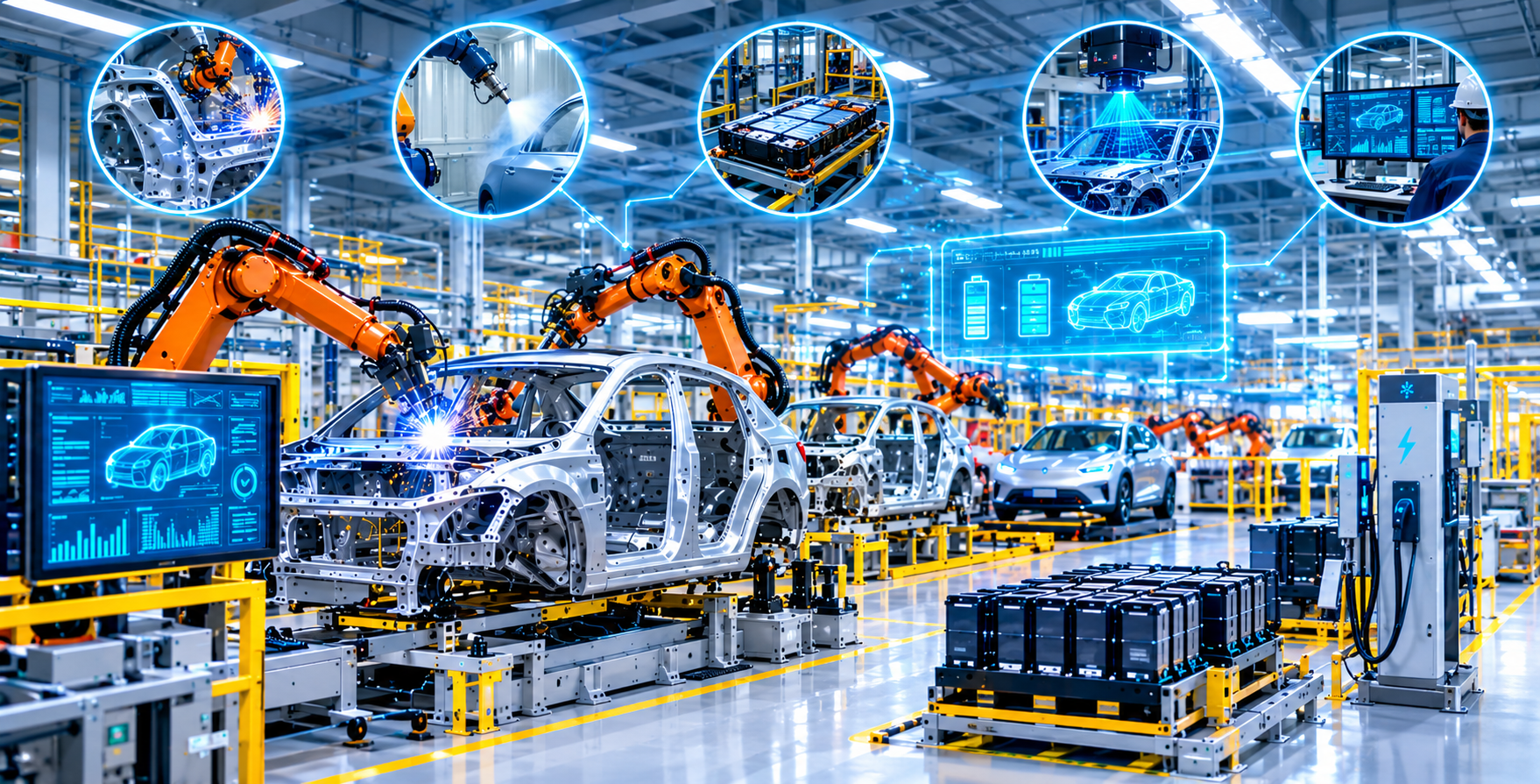
Imagine a vehicle production line where robotic systems handle complex assembly tasks, intelligent machines improve precision, and automated equipment adapts to changing vehicle designs. This is the promise of modern automotive manufacturing equipment.
As the automotive industry undergoes rapid transformation, traditional manufacturing processes are increasingly being complemented by industrial robotics, smart factory technologies, and advanced automation systems. The objective is clear: improve production efficiency, enhance product quality, reduce operational costs, and support the transition toward electric and next-generation vehicles.
From Traditional Manufacturing to Smart Production
Traditional automotive manufacturing relies on machining, welding, stamping, painting, assembly, and inspection equipment to produce vehicles at scale. While these processes remain essential, manufacturers face growing pressure to increase productivity, maintain consistent quality, and respond to changing consumer preferences.
Advanced manufacturing equipment adds another layer of efficiency.
By integrating robotics, sensors, programmable logic controllers, and digital monitoring systems, manufacturers can optimize production workflows, reduce manual intervention, and improve manufacturing precision. These technologies also help automotive companies manage complex production requirements across conventional, hybrid, and electric vehicle platforms.
The biggest shift? Moving from conventional production lines toward flexible, automated, and data-driven manufacturing environments.
Three Ways Advanced Equipment Is Transforming Automotive Manufacturing
1. Smarter Automation and Robotics
Industrial robots are transforming welding, painting, material handling, and assembly operations. Automated systems can perform repetitive tasks with consistent precision, helping manufacturers improve production speed and reduce variability.
As automakers seek greater flexibility and productivity, robotics and automation equipment are becoming increasingly important components of modern vehicle manufacturing facilities.
2. Supporting Electric Vehicle Production
The transition toward electric mobility is creating new manufacturing requirements across the automotive value chain. Electric vehicles require specialized production processes for battery housings, electric powertrain components, lightweight structures, and thermal management systems.
Manufacturing equipment providers are responding with adaptable machinery, precision assembly systems, and advanced inspection technologies designed to support evolving vehicle architectures.
3. Improving Quality and Operational Efficiency
Machining, cutting, welding, coating, and inspection equipment remain fundamental to vehicle production. Advanced testing systems and digital monitoring technologies help manufacturers identify defects, maintain production standards, and improve process consistency.
Combined with automated material handling and predictive maintenance capabilities, these solutions can help reduce downtime, improve resource utilization, and support more efficient manufacturing operations.
Why This Market Matters Globally
From large-scale automotive manufacturing hubs in Asia-Pacific to established production facilities across Europe and North America, automakers are investing in technologies that improve productivity and support increasingly complex vehicle designs.
Asia-Pacific benefits from substantial vehicle production, expanding electric vehicle supply chains, and continued investment in industrial automation. China remains a major manufacturing center, while Japan and South Korea contribute advanced robotics and precision engineering capabilities. India is also emerging as an important market, supported by domestic vehicle demand, manufacturing initiatives, and growing electric mobility investments.
Meanwhile, manufacturers across other regions are modernizing production facilities to improve efficiency, meet changing regulatory requirements, and strengthen their competitiveness.
Equipment manufacturers, robotics providers, automation specialists, and industrial technology companies are well positioned to contribute to this transformation.
What's Next for Automotive Manufacturing Equipment?
The next phase of automotive manufacturing will increasingly combine industrial robotics, artificial intelligence, connected sensors, digital twins, and real-time production analytics. These technologies can support more responsive production lines, improve equipment monitoring, and help manufacturers make better-informed operational decisions.
The growing adoption of electric vehicles may also accelerate investment in specialized assembly equipment, battery manufacturing processes, and advanced inspection systems. At the same time, manufacturers are likely to prioritize energy-efficient machinery, flexible production systems, and technologies that support sustainability objectives.
However, adoption will depend on practical considerations such as high initial investment, skilled labor availability, cyber security, system integration, and the complexity of upgrading existing production facilities.
Ultimately, the value of automotive manufacturing equipment will not be measured solely by production speed, but by how effectively it helps manufacturers deliver consistent quality, operational flexibility, and long-term efficiency.
The future of automotive manufacturing is not just about producing more vehicles. It's about producing them smarter.
Market Outlook: Growth Through 2031
According to the research report Global Automotive Manufacturing Equipment Market Outlook, 2031, published by Bonafide Research, the global automotive manufacturing equipment market was valued at more than USD 32.59 billion in 2025 and is projected to exceed USD 44.04 billion by 2031, registering a compound annual growth rate (CAGR) of 5.28% during 2026–2031.
Machining and cutting equipment continues to play a foundational role in vehicle production, while robotics and automation equipment are gaining importance as manufacturers pursue higher precision and reduced manual intervention. Automatic equipment remains a significant component of the market, supported by the growing adoption of integrated production systems. Passenger vehicles represent a major source of demand, while electric vehicle manufacturing is creating additional opportunities for specialized equipment and advanced assembly technologies.
As automotive manufacturers continue to invest in automation, electrification, and production modernization, automotive manufacturing equipment is expected to remain an essential part of the evolving global mobility ecosystem.
The road ahead will be shaped by manufacturers that can combine advanced machinery, intelligent automation, and flexible production capabilities to meet the changing demands of the automotive industry.
See how you can up your career status

Global Electric Motor Market Outlook, 2029” published by Bonafide Research, the market is anticipated to cross USD 220 Billion by 2029, increasing from USD 141.37 Billion in 2023.

Global Cable Management Market Outlook, 2030 are expected to reach a market size of more than USD 42.10 Billion by 2030

The Global Dry Mix Mortar Market was valued at more than USD 48.72 Billion in 2025 and is expected to reach a market size of more than USD 65.88 Billion by 2031, expanding at a CAGR of approximately 5.29% from 2026 to 2031.

The global flanges market is becoming increasingly important to industrial piping and mechanical connection systems, supporting oil and gas, chemical and petrochemical, power generation, water treatment, mining, marine, and manufacturing applications. The market was valued at USD 6.32 billion in 2025 and is projected to exceed USD 8.81 billion by 2031, growing at a 5.84% CAGR during 2026–2031.
 We are friendly and approachable, give us a call.