

Top Six Companies Global Spray Drying Equipment Market
Global Spray Drying Equipment Market Outlook, 2030 are expected to reach a market size of more than USD 9.65 Billion by 2030

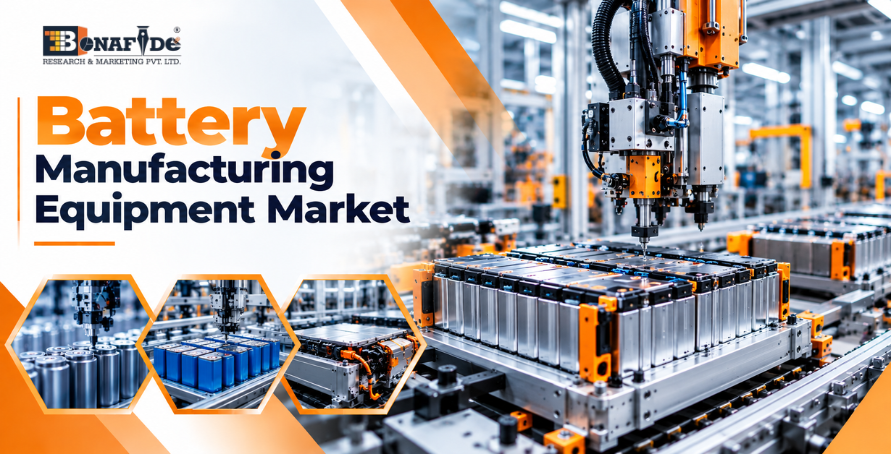
The global battery industry is moving beyond capacity expansion toward smarter, more efficient and technologically advanced manufacturing. Electric vehicle adoption, energy storage deployment and regional battery investments are creating demand for specialized equipment that can improve production speed, reduce defects and deliver consistent battery quality. For equipment manufacturers, the next growth opportunity lies not only in building new production lines but also in making battery manufacturing more competitive.
According to the research report, "Global Battery Manufacturing Equipment Market Outlook, 2031," published by Bonafide Research, the Global Battery Manufacturing Equipment Market Outlook was valued at more than USD 18.33 Billion in 2025, and expected to reach a market size of more than USD 57.01 Billion by 2031 with the CAGR of 21.36% from 2026-2031.
According to the International Energy Agency (IEA), global electric-vehicle battery deployment reached approximately 1.2 TWh in 2025, increasing by almost 30% year-on-year. Global lithium-ion battery manufacturing capacity exceeded 4 TWh, with China accounting for more than 80% of the total.
Energy storage is creating another source of demand. Global battery storage installations added 108 GW of capacity in 2025, up 40% from 2024. Lithium iron phosphate (LFP) batteries accounted for approximately 90% of battery storage deployments, reinforcing the importance of manufacturing equipment suited to this chemistry.
These developments support investment in electrode processing, cell assembly, formation and testing, and module and pack assembly. However, battery deployment does not translate directly into equipment revenue; actual demand depends on new factory projects, machinery orders, production-line upgrades and commissioning schedules.
1. Automation and precision engineering
Battery manufacturers are increasingly focusing on automated material handling, precision coating, machine vision, inline inspection and digital process monitoring. These technologies help identify defects, improve production consistency and reduce material waste. Integrated manufacturing systems also enable better coordination between electrode production, cell assembly and testing, making automation a key priority for high-volume battery factories.
2. Dry-electrode coating
Traditional wet electrode manufacturing requires a drying stage that consumes energy. Dry-electrode processing can eliminate this stage, potentially reducing energy requirements and simplifying production. In June 2025, Koenig & Bauer and Volkswagen subsidiary PowerCo announced successful proof-of-concept testing for a solvent-free coating system. Further industrial-scale development is needed to establish its manufacturing performance, scalability and commercial benefits.
3. Solid-state battery manufacturing
Solid-state batteries use solid electrolytes instead of conventional liquid electrolytes, creating specialized requirements for material processing, layer formation, pressing and cell testing. In February 2026, QuantumScape inaugurated its automated Eagle Line for pilot production, customer sampling and testing. This demonstrates progress toward manufacturing readiness, but widespread commercial-scale production will depend on successful technical qualification, reliable yields and competitive production costs.
China remains the largest battery manufacturing hub, supported by an extensive supplier ecosystem and established production capacity. However, investment is expanding in other markets. The IEA reported that lithium-ion battery manufacturing capacity grew by approximately 50% in both the United States and the European Union during 2025.
This expansion creates opportunities for equipment suppliers in new production lines, factory integration, automation and technical services. Nevertheless, announced capacity does not guarantee immediate machinery sales. Project financing, equipment procurement, installation and factory ramp-up determine when manufacturing investment translates into actual equipment demand.
The outlook for the Battery Manufacturing Equipment Market will depend on electric vehicle production, energy storage growth, manufacturing localization and the need to improve factory efficiency. Equipment suppliers must also navigate high capital costs, competitive pricing, project delays and lengthy production ramp-ups.
Automation, advanced testing, flexible manufacturing systems and next-generation electrode technologies are likely to remain important areas of development. Meanwhile, solid-state batteries offer a longer-term opportunity as manufacturers progress from pilot lines toward commercial production.
The defining trend is the shift from simply expanding battery capacity to producing batteries more efficiently, reliably and competitively. Companies that combine precise machinery, integrated production systems and strong technical support will be better positioned to serve the evolving needs of the global battery industry.
See how you can up your career status
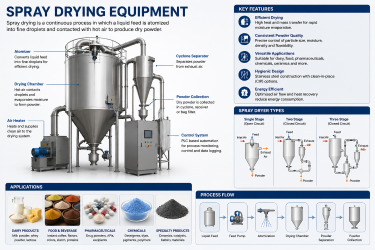
Global Spray Drying Equipment Market Outlook, 2030 are expected to reach a market size of more than USD 9.65 Billion by 2030
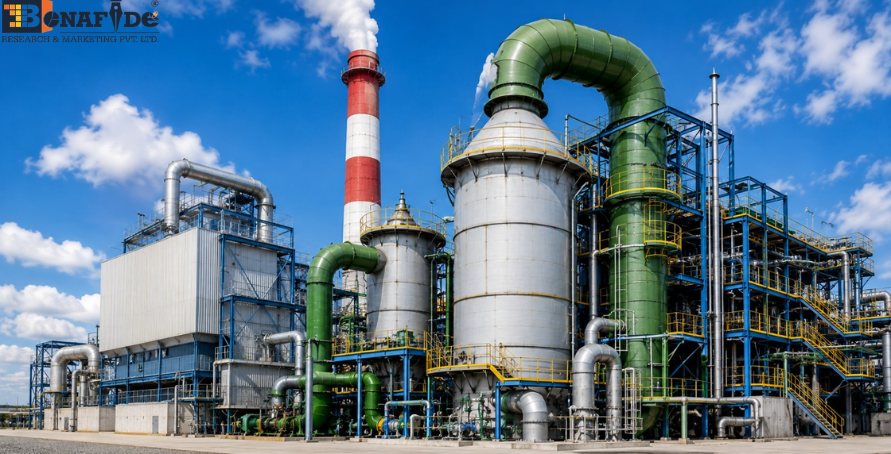
The Global Flue Gas Desulfurization Market was valued at more than USD 23.72 billion in 2025 and is projected to reach more than USD 31.94 billion by 2031, at a 5.22% CAGR from 2026-2031.
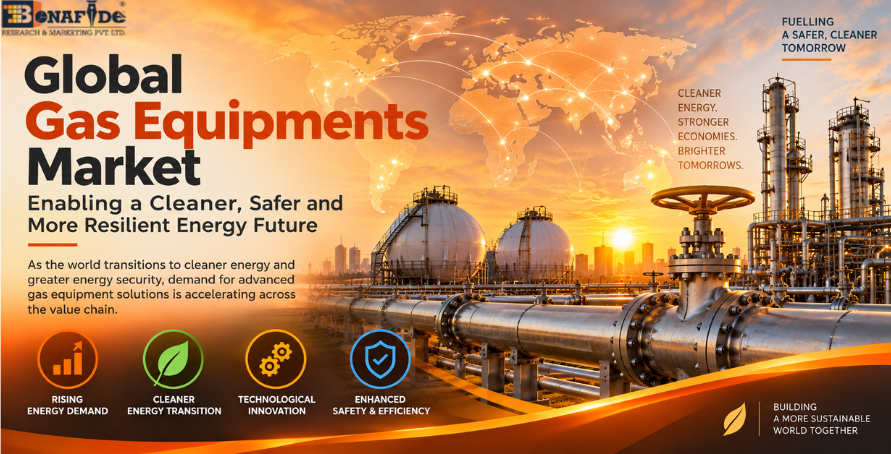
According to the research report, "Global Gas Equipment Market Outlook, 2031," published by Bonafide Research, the Global Gas Equipment Market Outlook was valued at more than USD 81.97 Billion in 2025, and is expected to reach a market size of more than USD 120.03 Billion by 2031 with a CAGR of 6.73% from 2026-2031.

The market was valued at USD 109.49 Billion in 2025 and is projected to reach USD 138.71 Billion by 2031, expanding at a 4.12% CAGR from 2026 to 2031.
 We are friendly and approachable, give us a call.