Imagine a gas pipeline that doesn't just report a problem but helps operators recognize warning signs before a potential leak escalates. This is the promise of AI-powered gas monitoring.
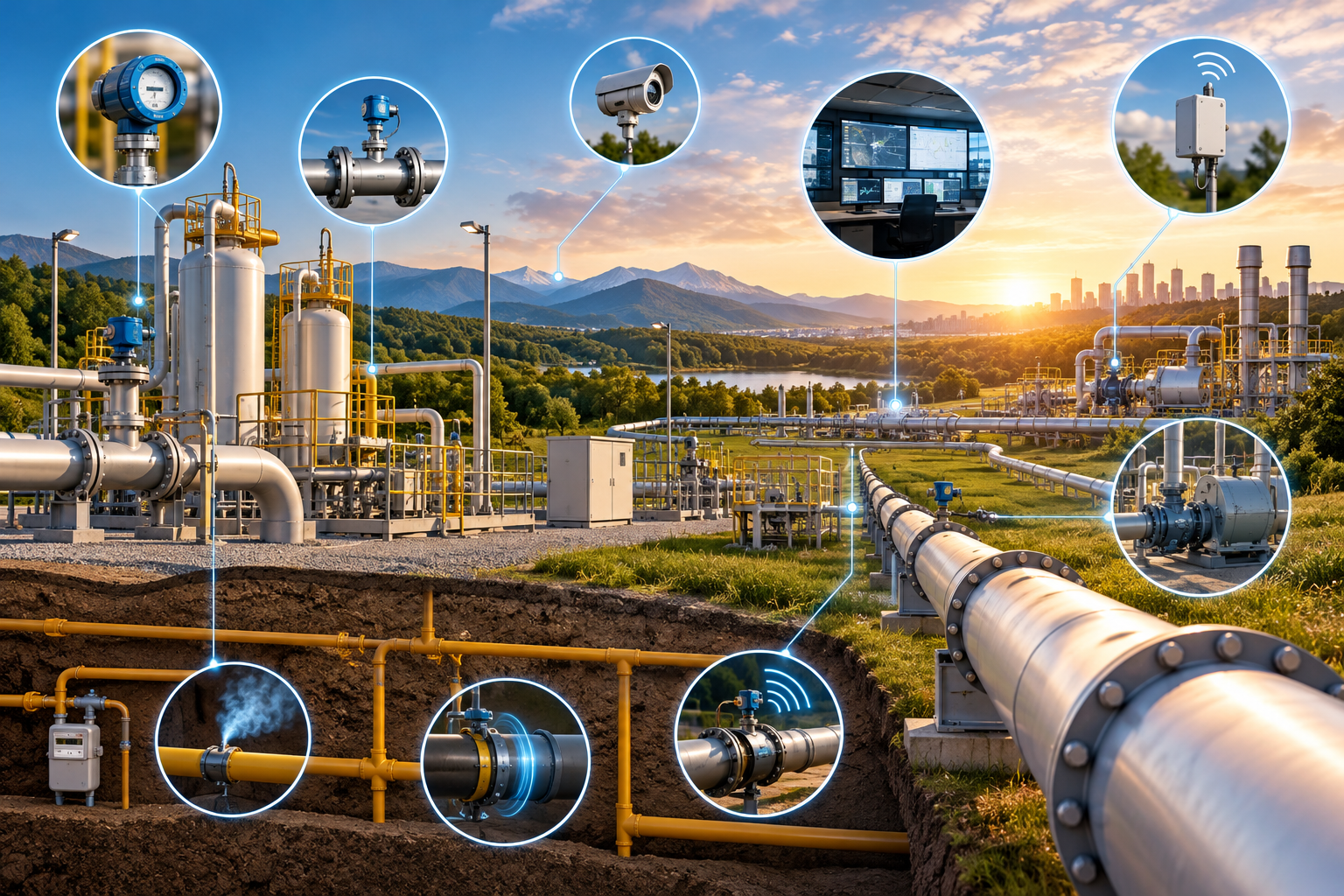
As gas networks become more complex, traditional monitoring methods are increasingly being complemented by artificial intelligence (AI), connected sensors, and predictive analytics. The objective is simple: detect abnormal conditions earlier, respond more effectively, and make gas infrastructure safer and smarter.
From Leak Detection to Leak Prediction
Traditional gas monitoring systems rely on sensors, alarms, pressure measurements, and periodic inspections to identify potential problems. While these methods remain essential, interpreting information from thousands of monitoring points can be challenging.
AI adds another layer of intelligence.
By analyzing pressure fluctuations, flow measurements, gas concentration readings, and historical operating patterns, AI-powered systems can identify anomalies that may indicate a developing issue. These insights help operators prioritize inspections and investigate potential risks more efficiently.
The biggest shift? Moving from reacting to alarms toward anticipating potential problems.
Three Ways AI Is Transforming Gas Monitoring
1. Smarter Leak Detection
AI can analyze multiple data sources to identify unusual patterns that conventional threshold-based monitoring might not easily distinguish. This can help operators investigate suspected leaks and prioritize high-risk locations.
2. Predictive Maintenance
Changes in equipment performance, vibration, temperature, or pressure may indicate developing faults. Advanced analytics can help identify these patterns and support maintenance planning before equipment failures disrupt operations.
3. Better Methane Monitoring
Methane emissions have become an important environmental priority for the gas industry. By combining sensor readings, inspection data, and other monitoring inputs, analytics platforms can help operators identify recurring emission sources and assess corrective actions.
AI does not independently confirm every leak or replace physical inspections. Reliable sensors, field verification, and established safety procedures remain essential.
Why This Trend Matters Globally
From extensive transmission pipelines in North America to expanding gas distribution networks across Asia-Pacific and infrastructure modernization in Europe, the Middle East, Africa, and South America, operators face a common challenge: maintaining safe, reliable, and efficient gas networks.
AI-enabled monitoring can help address this challenge by improving data visibility, supporting faster investigation, and making maintenance activities more targeted.
Technology providers across industrial automation, instrumentation, gas detection, and digital infrastructure are well positioned to contribute to this transformation.
What's Next for AI-Powered Gas Utilities?
The next phase will likely combine AI with connected sensors, SCADA platforms, cloud analytics, and digital pipeline models. Hydrogen-ready infrastructure may also create new monitoring requirements as energy networks evolve.
However, adoption will depend on practical considerations such as data quality, cybersecurity, system integration, workforce capabilities, and the ability to demonstrate measurable operational benefits.
Ultimately, AI's value will not be measured by how many alerts a system generates, but by how effectively it helps operators make safer and better-informed decisions.
The future of gas monitoring is not just about detecting leaks faster. It's about understanding risks earlier.
As the energy industry embraces digital transformation, AI-powered gas monitoring could become an increasingly important tool for improving pipeline safety, operational efficiency, and environmental performance.




 We are friendly and approachable, give us a call.