

 By Sunny Keshri
 Top Companies Global Remote Working Software Market
Global Remote Working Software Market Outlook, 2030 is projected to reach market size of USD 94.80 Billion by 2030


The skyline of every modern city stands as a testament to human ambition and engineering mastery and at the heart of this progress lies construction equipment. From the earliest days of civilization to today’s cutting-edge smart cities, the tools and machines used to build our world have evolved at a remarkable pace. What began with primitive hand tools and simple pulleys has now transformed into an ecosystem of highly specialized, tech-infused machinery capable of reshaping landscapes and assembling structures with pinpoint precision. The evolution of construction equipment not only reflects technological advancement but also mirrors the changing priorities of society speed, safety, sustainability, and efficiency.
In the early days of organized construction, labor-intensive manual tools and animal-driven carts dominated building efforts. The invention of the pulley, lever, and wheel laid the foundation for more complex machines. As industrialization gained momentum in the 19th and early 20th centuries, steam engines revolutionized construction, giving rise to powered cranes, excavators, and road rollers. These machines drastically reduced the time and manpower needed for massive infrastructure projects such as railroads, bridges, and skyscrapers. With the onset of diesel and electric-powered engines, the mid-20th century marked another turning point where machinery became more powerful, mobile, and diverse, paving the way for the modern construction site.
Fast forward to the 21st century, and construction equipment has entered the digital age. Today’s machines are not just mechanical powerhouses they are smart, interconnected systems embedded with sensors, GPS, telematics, and automation. Excavators can now dig with millimeter-level precision, thanks to real-time feedback systems. Drones are used for surveying and progress monitoring, while autonomous or remotely operated bulldozers and loaders reduce human risk and increase productivity. The integration of Building Information Modeling (BIM) with equipment allows for synchronized planning and execution, minimizing errors and wastage. These advancements enable projects to be completed faster, more accurately, and often under budget qualities essential in today’s competitive construction environment.
Another pivotal shift in the evolution of construction equipment is the growing emphasis on sustainability. As environmental concerns become more pressing, manufacturers are designing machines that are fuel-efficient, electric, or even hybrid-powered to reduce emissions on job sites. Battery-operated excavators, solar-powered cranes, and biodegradable hydraulic fluids are becoming more common. The circular economy model is also influencing the industry promoting refurbished machinery, recycling of parts, and modular design for easier upgrades and longer life cycles. These innovations signal a broader industry commitment to building not just taller and faster, but also cleaner and more responsibly.
See how you can up your career status

Global Remote Working Software Market Outlook, 2030 is projected to reach market size of USD 94.80 Billion by 2030
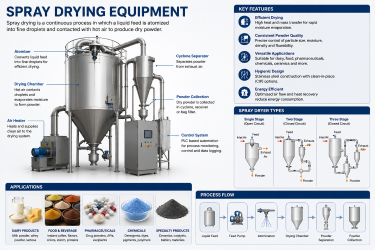
Global Spray Drying Equipment Market Outlook, 2030 are expected to reach a market size of more than USD 9.65 Billion by 2030

The Global Dry Mix Mortar Market was valued at more than USD 48.72 Billion in 2025 and is expected to reach a market size of more than USD 65.88 Billion by 2031, expanding at a CAGR of approximately 5.29% from 2026 to 2031.

According to the research report "Global Ready-Mix Concrete Market Outlook, 2031," published by Bonafide Research, the Global Ready-Mix Concrete Market was valued at more than USD 590.00 Billion in 2025 and is expected to reach a market size of more than USD 778.20 Billion by 2031, with a CAGR of 4.84% from 2026–2031.
 We are friendly and approachable, give us a call.