

Top Six Companies Global Solar Tracker Market Market
Global Solar Tracker Market Outlook, 2030 is projected to reach market size of USD 25.43 Billion by 2030.


A solar panel has traditionally been judged by what happens on its front side. Bifacial solar technology is changing that equation by turning the back of the module into an additional source of electricity generation. Instead of relying only on direct sunlight reaching the front surface, bifacial modules can also capture reflected and diffused sunlight reaching their rear side. This seemingly simple change is creating a broader shift in how solar projects are designed, evaluated and optimized.
The growing interest in bifacial technology comes at a time when the solar industry is increasingly focused on generating more electricity from every installed asset. Adding more solar panels is not always the most efficient answer, particularly where land, infrastructure or project economics are constraints. Bifacial modules offer another approach: increase energy generation by making better use of the sunlight already available around the module. The global bifacial solar market was valued at more than USD 22.84 billion in 2025 and is expected to reach more than USD 52.65 billion by 2031, growing at a CAGR of 15.33% from 2026 to 2031.
What makes the technology particularly interesting is that bifacial performance is not determined by the module alone. Advances in photovoltaic cell technology are an important part of the equation, with technologies such as TOPCon and heterojunction (HJT) supporting the development of increasingly efficient bifacial modules. Higher cell efficiency can increase the amount of electricity generated from incoming sunlight, while improvements in module construction and materials can support long-term performance. However, the rated efficiency of the module tells only part of the story. The amount of additional electricity generated from the rear side depends heavily on how the module is integrated into the solar installation.
This is where mounting design becomes increasingly important. In a conventional solar project, mounting structures are primarily considered in terms of mechanical support, orientation and installation requirements. For bifacial systems, their design can directly influence the amount of light available to the rear of the module. Module elevation, tilt angle, row spacing and orientation can affect rear-side irradiance, making mounting configuration an important component of overall energy-yield optimization. A bifacial module positioned and spaced appropriately can have greater access to reflected light, while an inefficient configuration may limit much of the technology's potential.
The surface beneath a bifacial module also becomes part of the energy-generation equation. Different ground surfaces reflect different amounts of incoming solar radiation, and this albedo effect can influence how much light reaches the rear side of the module. This means that the same bifacial module can perform differently depending on the project environment. Ground conditions, surrounding structures, shading and site layout therefore become important considerations during project planning. Rather than viewing the panel as an isolated component, developers increasingly need to consider the interaction between the module and its surroundings.
The integration of solar trackers adds another layer of complexity and opportunity. Single-axis tracking systems can change module orientation throughout the day, influencing both front-side solar capture and the amount of light reaching the rear surface. When bifacial modules and trackers are combined, factors such as tracker geometry, module height, row-to-row spacing and ground reflectivity need to be considered together. This is moving solar engineering toward a more integrated approach in which the module, mounting system and project site are optimized as a single system rather than selected independently.
This shift is particularly relevant for large-scale solar projects, where even incremental improvements in energy yield can have a meaningful impact across thousands or millions of modules. For project developers, the objective is increasingly moving beyond achieving a higher nameplate capacity toward maximizing lifetime electricity generation from the available land and infrastructure. Bifacial technology can support this objective, although the actual benefit remains dependent on project-specific conditions and system design.
The development of bifacial solar also illustrates how photovoltaic innovation is changing. Earlier improvements in solar were largely centered on increasing cell efficiency and module power. Today, the industry is increasingly looking at what happens after the module leaves the manufacturing facility. Cell technology, module design, mounting structure, tracker configuration, ground conditions and site engineering are becoming interconnected parts of the same performance equation.
As the solar industry continues to expand, this system-level perspective could become increasingly important. The next competitive advantage may not simply come from producing a module with a higher rated power output, but from designing an installation that allows the module to capture as much available sunlight as possible. Bifacial solar provides an interesting example of this transition because its value depends on both the technology inside the module and the environment surrounding it. Ultimately, the appeal of bifacial solar can be summed up in a simple idea: the sunlight reaching the ground does not necessarily have to be wasted. By combining advanced cell technologies with optimized mounting systems, trackers and suitable site conditions, solar developers have an opportunity to extract additional value from the same installation.
The question for the industry is therefore changing from “How much power can one solar panel generate?” to “How much of the available sunlight can one solar installation actually capture?” That change in perspective could be one of the factors shaping the next stage of photovoltaic innovation.
See how you can up your career status
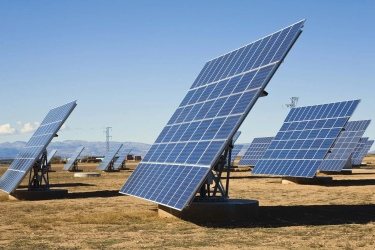
Global Solar Tracker Market Outlook, 2030 is projected to reach market size of USD 25.43 Billion by 2030.

The Global Scrubbers System market was valued at more than USD 5.59 Billion in 2025, and expected to reach a market size of more than USD 9.73 Billion by 2031 with the CAGR of 9.94% from 2026-31.

The Global Circuit Breakers market was valued at more than USD 22.76 Billion in 2025, and expected to reach a market size of more than USD 35.92 Billion by 2031 with the CAGR of 8.10% from 2026-2031.

The global petroleum sorbent pads market was valued at over USD 25.88 billion in 2025 and is expected to exceed USD 43.22 billion by 2031, growing at a CAGR of over 9.16%.
 We are friendly and approachable, give us a call.