


Passive optical network market expands rapidly with rising demand for high-speed broadband and fiber communication infrastructure.
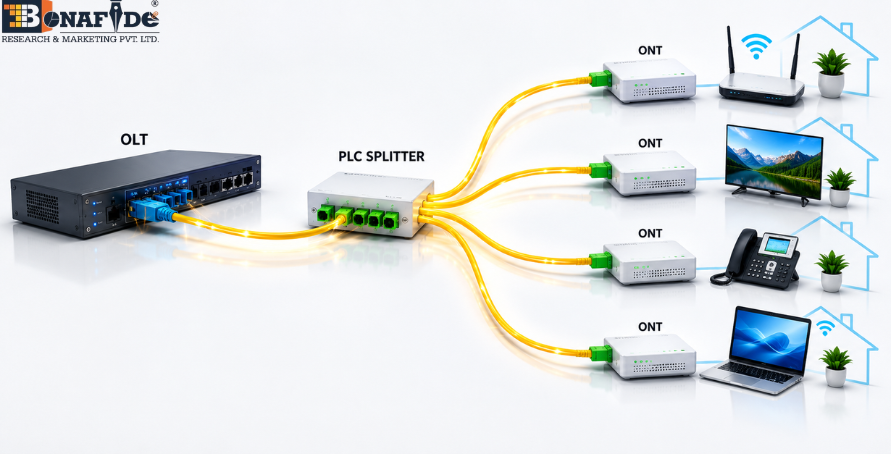
According to the research report "Global Passive Optical Network Market Outlook, 2031," published by Bonafide Research, the Global Passive Optical Network market was valued at more than USD 25.11 Billion in 2025, and expected to reach a market size of more than USD 55.57 Billion by 2031 with the CAGR of 14.52% from 2026-2031. The global passive optical network (PON) market is undergoing a profound transformation, positioning itself as the undisputed backbone of next-generation telecommunication infrastructures. A primary driver of this market is the exponential surge in bandwidth-intensive applications, including ultra-high-definition video streaming, cloud computing, and the proliferation of Internet of Things devices, which collectively render traditional copper-based architectures obsolete. Furthermore, the structural advantages of PONs notably their low operational costs, immunity to electromagnetic interference, and energy-efficient point-to-multipoint topologies that drastically reduce field-powered equipment compel operators to accelerate fiber-to-the-home rollouts. Monumental opportunities reside in the rapid commercialization of high-speed standards like 50G-PON and the integration of artificial intelligence for automated network monitoring and dynamic resource allocation. The massive scaling of smart, sustainable cities also presents an expansive horizon, where next-generation PON architectures will deliver the low-latency, high-capacity fronthaul and backhaul connections necessary to support autonomous vehicular grids and dense mobile cell sites. Crucial to navigating this future are prominent industry associations and standard bodies, such as the International Telecommunication Union (ITU-T), the Institute of Electrical and Electronics Engineers (IEEE) Ethernet Working Group, and the Full Service Access Network (FSAN) group. By harmonizing global manufacturing standards and ensuring seamless interoperability across diverse wholesale platforms, these organizations mitigate operator risk, drive hardware maturation, and ensure that the passive distribution network remains viable for decades of subsequent technology upgrades.
Major international equipment vendors, including Huawei Technologies, Nokia, ZTE Corporation, Calix, and ADTRAN, dominate the market by offering advanced solutions that facilitate the migration from legacy copper to high-speed frameworks like XGS-PON and 50G-PON. To maintain a distinct edge, these tier-one innovators rely on aggressive research and development, open-source software integration, and strategic partnerships with regional internet service providers to deploy cloud-native management systems and disaggregated optical line terminal architectures. Government initiatives, such as nationwide gigabit mandates and rural broadband subsidies, act as primary catalysts for infrastructure rollouts. However, vendors must navigate stringent and evolving compliance standards, including Europe’s energy efficiency directives and rigid cybersecurity laws focused on vendor-specific optical firmware. Furthermore, reciprocal trade tariffs and shifting international regulations concerning cross-border data security present ongoing compliance challenges that can distort regional vendor competitiveness. Supply chain analysis reveals a complex, globalized value chain that faces recurrent structural vulnerabilities. The production lifecycle depends on a steady influx of raw materials, advanced semiconductors, optical power splitters, and localized fiber cables. Geopolitical tensions and chip imbalances frequently stretch component lead times, causing temporary equipment shortages and pushing operators to embrace near-shoring or local sourcing strategies to ensure supply resilience and avoid project delays.
The service segment has become increasingly important in the passive optical network ecosystem because telecom operators, enterprises, and infrastructure providers depend heavily on specialized expertise throughout the entire lifecycle of optical network deployment. Passive optical networks are highly complex systems involving optical line terminals, splitters, wavelength management, fiber routing, and subscriber-side integration, all of which require precise planning and ongoing operational support. As global fiber broadband expansion accelerates, service providers are being extensively utilized for network architecture consulting, fiber installation, testing, fault detection, and long-term maintenance activities. Telecom companies are also modernizing aging copper infrastructure with advanced fiber systems, creating strong demand for migration and integration services. In many regions, operators prefer outsourcing network monitoring and maintenance functions to experienced vendors because managing high-capacity optical infrastructure internally can increase operational complexity and workforce costs. In addition, the rapid adoption of technologies such as 5G, cloud computing, remote work infrastructure, and smart city systems has intensified the need for uninterrupted optical connectivity, making proactive network management essential.
Wavelength division multiplexer and de-multiplexer components have become essential in modern passive optical networks because they allow operators to maximize the utilization of existing fiber infrastructure without deploying additional physical cables. These components separate and combine multiple optical wavelengths, enabling simultaneous transmission of large volumes of data over a single fiber strand. As internet traffic continues to rise due to video streaming, cloud applications, artificial intelligence, IoT devices, and enterprise digitalization, network providers are increasingly adopting wavelength-based technologies to improve bandwidth efficiency and transmission performance. Traditional optical systems often face limitations when handling rapidly increasing data loads, whereas wavelength division multiplexing components help expand network capacity while maintaining stable communication quality. Telecom operators are also using these components to support high-density broadband services and advanced applications such as 5G backhaul, data center interconnectivity, and smart infrastructure systems. In addition, wavelength division multiplexer/de-multiplexer devices help reduce infrastructure costs by minimizing the need for additional fiber installations in densely populated urban areas. Their ability to improve scalability and optimize spectrum utilization has made them highly attractive for both greenfield and brownfield network deployments.
Wavelength Division Multiplexing Passive Optical Network technology has gained substantial attention because it addresses many of the performance limitations associated with traditional shared-bandwidth optical systems. Unlike conventional PON architectures where multiple users share the same wavelength channels, WDM-PON allocates separate wavelengths to individual users or services, enabling highly secure, high-speed, and low-latency communication. This capability has become increasingly important as digital services require uninterrupted transmission of large data volumes across residential, commercial, and industrial environments. Modern applications such as 4K and 8K video streaming, cloud computing platforms, virtual reality systems, industrial automation, and edge computing generate enormous network traffic that conventional access networks may struggle to support efficiently. WDM-PON technology helps operators meet these growing demands while improving service quality and network reliability. In addition, telecom companies are adopting this technology to support 5G transport infrastructure because WDM-PON enables flexible and scalable fronthaul and backhaul connectivity with reduced signal interference. Enterprises and data centers also prefer WDM-based optical systems because they offer enhanced security and dedicated communication channels for mission-critical operations.
Industrial environments are increasingly integrating advanced digital technologies that depend on stable and high-capacity communication systems, making passive optical networks highly suitable for modern industrial operations. Manufacturing facilities, oil and gas plants, logistics centers, mining operations, and energy infrastructure are deploying automation systems, industrial IoT devices, robotics, and real-time monitoring technologies that generate large amounts of operational data requiring immediate transmission and processing. Traditional copper-based communication systems often struggle in industrial settings due to electromagnetic interference, limited bandwidth, and high maintenance requirements, whereas optical fiber networks provide superior reliability, longer transmission distances, and resistance to harsh environmental conditions. Passive optical networks also support centralized communication management, allowing industries to streamline operations and improve system efficiency. In smart factories, machine-to-machine communication, predictive maintenance platforms, and AI-driven analytics require uninterrupted connectivity with minimal latency, which further increases demand for advanced optical networking infrastructure.
Fiber to the Home has become the most widely adopted application in the passive optical network market because residential internet consumption has changed dramatically with the rise of digital services and connected living environments. Consumers now depend on high-speed broadband for activities such as ultra-high-definition video streaming, online gaming, cloud storage access, virtual learning, video conferencing, smart home management, and remote working. Conventional broadband technologies often face speed limitations and network instability during peak usage periods, whereas FTTH delivers direct fiber connectivity to homes, ensuring significantly higher bandwidth, lower latency, and more reliable performance. Telecom operators are increasingly replacing older copper-based infrastructure with fiber networks because FTTH systems support long-term scalability and lower maintenance requirements. In densely populated urban areas, FTTH deployment is also helping providers meet rising customer expectations for uninterrupted digital experiences. The growth of smart homes equipped with connected appliances, security systems, voice assistants, and IoT devices has further increased household data consumption, strengthening the need for robust optical access networks.
Major international equipment vendors, including Huawei Technologies, Nokia, ZTE Corporation, Calix, and ADTRAN, dominate the market by offering advanced solutions that facilitate the migration from legacy copper to high-speed frameworks like XGS-PON and 50G-PON. To maintain a distinct edge, these tier-one innovators rely on aggressive research and development, open-source software integration, and strategic partnerships with regional internet service providers to deploy cloud-native management systems and disaggregated optical line terminal architectures. Government initiatives, such as nationwide gigabit mandates and rural broadband subsidies, act as primary catalysts for infrastructure rollouts. However, vendors must navigate stringent and evolving compliance standards, including Europe’s energy efficiency directives and rigid cybersecurity laws focused on vendor-specific optical firmware. Furthermore, reciprocal trade tariffs and shifting international regulations concerning cross-border data security present ongoing compliance challenges that can distort regional vendor competitiveness. Supply chain analysis reveals a complex, globalized value chain that faces recurrent structural vulnerabilities. The production lifecycle depends on a steady influx of raw materials, advanced semiconductors, optical power splitters, and localized fiber cables. Geopolitical tensions and chip imbalances frequently stretch component lead times, causing temporary equipment shortages and pushing operators to embrace near-shoring or local sourcing strategies to ensure supply resilience and avoid project delays.
The service segment has become increasingly important in the passive optical network ecosystem because telecom operators, enterprises, and infrastructure providers depend heavily on specialized expertise throughout the entire lifecycle of optical network deployment. Passive optical networks are highly complex systems involving optical line terminals, splitters, wavelength management, fiber routing, and subscriber-side integration, all of which require precise planning and ongoing operational support. As global fiber broadband expansion accelerates, service providers are being extensively utilized for network architecture consulting, fiber installation, testing, fault detection, and long-term maintenance activities. Telecom companies are also modernizing aging copper infrastructure with advanced fiber systems, creating strong demand for migration and integration services. In many regions, operators prefer outsourcing network monitoring and maintenance functions to experienced vendors because managing high-capacity optical infrastructure internally can increase operational complexity and workforce costs. In addition, the rapid adoption of technologies such as 5G, cloud computing, remote work infrastructure, and smart city systems has intensified the need for uninterrupted optical connectivity, making proactive network management essential.
Wavelength division multiplexer and de-multiplexer components have become essential in modern passive optical networks because they allow operators to maximize the utilization of existing fiber infrastructure without deploying additional physical cables. These components separate and combine multiple optical wavelengths, enabling simultaneous transmission of large volumes of data over a single fiber strand. As internet traffic continues to rise due to video streaming, cloud applications, artificial intelligence, IoT devices, and enterprise digitalization, network providers are increasingly adopting wavelength-based technologies to improve bandwidth efficiency and transmission performance. Traditional optical systems often face limitations when handling rapidly increasing data loads, whereas wavelength division multiplexing components help expand network capacity while maintaining stable communication quality. Telecom operators are also using these components to support high-density broadband services and advanced applications such as 5G backhaul, data center interconnectivity, and smart infrastructure systems. In addition, wavelength division multiplexer/de-multiplexer devices help reduce infrastructure costs by minimizing the need for additional fiber installations in densely populated urban areas. Their ability to improve scalability and optimize spectrum utilization has made them highly attractive for both greenfield and brownfield network deployments.
Wavelength Division Multiplexing Passive Optical Network technology has gained substantial attention because it addresses many of the performance limitations associated with traditional shared-bandwidth optical systems. Unlike conventional PON architectures where multiple users share the same wavelength channels, WDM-PON allocates separate wavelengths to individual users or services, enabling highly secure, high-speed, and low-latency communication. This capability has become increasingly important as digital services require uninterrupted transmission of large data volumes across residential, commercial, and industrial environments. Modern applications such as 4K and 8K video streaming, cloud computing platforms, virtual reality systems, industrial automation, and edge computing generate enormous network traffic that conventional access networks may struggle to support efficiently. WDM-PON technology helps operators meet these growing demands while improving service quality and network reliability. In addition, telecom companies are adopting this technology to support 5G transport infrastructure because WDM-PON enables flexible and scalable fronthaul and backhaul connectivity with reduced signal interference. Enterprises and data centers also prefer WDM-based optical systems because they offer enhanced security and dedicated communication channels for mission-critical operations.
Industrial environments are increasingly integrating advanced digital technologies that depend on stable and high-capacity communication systems, making passive optical networks highly suitable for modern industrial operations. Manufacturing facilities, oil and gas plants, logistics centers, mining operations, and energy infrastructure are deploying automation systems, industrial IoT devices, robotics, and real-time monitoring technologies that generate large amounts of operational data requiring immediate transmission and processing. Traditional copper-based communication systems often struggle in industrial settings due to electromagnetic interference, limited bandwidth, and high maintenance requirements, whereas optical fiber networks provide superior reliability, longer transmission distances, and resistance to harsh environmental conditions. Passive optical networks also support centralized communication management, allowing industries to streamline operations and improve system efficiency. In smart factories, machine-to-machine communication, predictive maintenance platforms, and AI-driven analytics require uninterrupted connectivity with minimal latency, which further increases demand for advanced optical networking infrastructure.
Fiber to the Home has become the most widely adopted application in the passive optical network market because residential internet consumption has changed dramatically with the rise of digital services and connected living environments. Consumers now depend on high-speed broadband for activities such as ultra-high-definition video streaming, online gaming, cloud storage access, virtual learning, video conferencing, smart home management, and remote working. Conventional broadband technologies often face speed limitations and network instability during peak usage periods, whereas FTTH delivers direct fiber connectivity to homes, ensuring significantly higher bandwidth, lower latency, and more reliable performance. Telecom operators are increasingly replacing older copper-based infrastructure with fiber networks because FTTH systems support long-term scalability and lower maintenance requirements. In densely populated urban areas, FTTH deployment is also helping providers meet rising customer expectations for uninterrupted digital experiences. The growth of smart homes equipped with connected appliances, security systems, voice assistants, and IoT devices has further increased household data consumption, strengthening the need for robust optical access networks.
Quick Contacts

Latest Press Release


 We are friendly and approachable, give us a call.