A decisive phase is shaping the global
drilling machine market, driven by accelerated infrastructure pipelines, energy transition investments, and precision manufacturing demand seen across regions such as North America, the Middle East, and Asia-Pacific. Over the past five years, deployment has shifted from conventional mechanical rigs toward digitally integrated,
sensor-enabled drilling systems capable of real-time data feedback and
predictive maintenance. Growth momentum is closely tied to large-scale initiatives such as India’s National Infrastructure Pipeline and the U.S. Bipartisan Infrastructure Law, both of which have intensified demand for high-capacity rotary and directional drilling systems. Mining expansion in countries like Australia and Chile has further strengthened equipment utilization rates, while offshore exploration in Brazil and West Africa continues to require technologically advanced deepwater drilling units. Constraints remain evident in the form of volatile raw material costs, particularly alloy steel, alongside stringent environmental compliance standards such as the European Union’s Machinery Directive and emissions norms enforced by the U.S. Environmental Protection Agency. Substitution pressure from non-invasive excavation technologies and automated boring solutions is gradually reshaping procurement preferences, especially in urban projects. Technological progress is anchored in automation, with AI-assisted drilling optimization and remote-controlled rigs improving safety and efficiency benchmarks. Trade policies, including import duties on heavy machinery in emerging economies and localization mandates, influence procurement strategies and supply chain configurations. Industry events such as Bauma in Germany and CONEXPO-CON/AGG in the United States continue to serve as critical platforms for showcasing innovations, reinforcing competitive intensity and cross-border partnerships.
According to the research report, “Global Drilling Machine Market Outlook, 2031” published by Bonafide Research, the market was valued at more than USD 26.57 Billion in 2025, and expected to reach a market size of more than USD 38.78 Billion by 2031 with the CAGR of 6.67% from 2026-2031. Momentum across the global drilling machine market is reinforced by strategic moves from leading manufacturers and evolving buyer expectations centered on efficiency, lifecycle cost, and compliance. Companies such as Caterpillar, Sandvik, Epiroc, Atlas Copco, and Komatsu have introduced advanced drilling solutions integrating automation, electrification, and data analytics capabilities, targeting sectors from mining to construction and oil exploration. Sandvik’s intelligent rotary blasthole drills and Epiroc’s
battery-electric rigs illustrate a broader pivot toward sustainability-linked product portfolios, aligning with carbon reduction targets adopted by major mining operators. Entry barriers remain significant due to high capital intensity, stringent
certification requirements, and the need for after-sales service networks, which collectively favor established players with global distribution capabilities. Pricing dynamics are influenced by customization requirements, particularly in oilfield and geotechnical applications, leading to project-based contracts rather than standardized transactions. Leasing and equipment-as-a-service models are gaining traction, especially among mid-sized contractors seeking to optimize capital expenditure. Supply chains are increasingly regionalized, with manufacturers expanding assembly units in markets such as India and Southeast Asia to mitigate tariff exposure and
logistics risks. Investment flows have remained steady, supported by private equity interest in mining technology and government-backed infrastructure funding. Buyer behavior reflects a growing preference for digitally connected equipment capable of integrating with enterprise resource planning systems, enhancing operational visibility.
The deep hole drilling machine is rapidly emerging as the fastest growing segment in the global drilling machine market. This segment has garnered increasing attention due to its critical role in industries such as aerospace, automotive, and energy. Deep hole drilling machines are specifically designed to create precise, deep, and narrow holes in materials like metal and composite alloys. These machines are vital in the production of components used in engines, turbines, hydraulic systems, and even certain medical devices. With the rise of complex engineering applications that demand high accuracy and reliability, deep hole drilling machines have become indispensable. The global push towards lightweight yet durable materials, especially in aerospace and automotive applications, further drives demand for these advanced machines. Additionally, deep hole drilling machines are increasingly utilized in the oil and gas industry for drilling deep wells in hard-to-reach places. The ongoing advancement of drilling technologies such as high-precision boring and improved chip removal systems is also contributing to the segment's growth. Key players in the global market are introducing machines equipped with automated systems to improve precision, minimize errors, and boost overall efficiency.
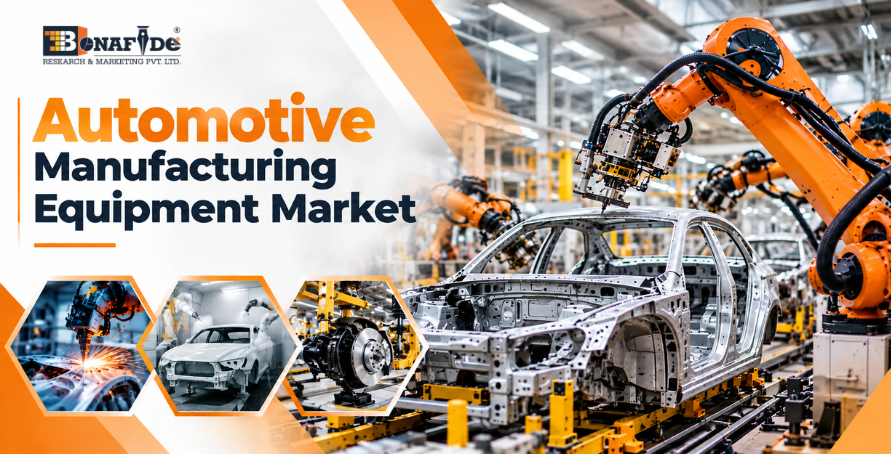
The automotive industry is the largest segment in the global drilling machine market, driven by the high demand for precision drilling in vehicle manufacturing. The need for drilling machines in the automotive sector is primarily centered around the production of engine blocks, chassis,
gears, and other complex components that require intricate and accurate drilling operations. The growing demand for electric vehicles (EVs) has further amplified the need for specialized drilling machines, as EV components, such as
electric motor housings and battery enclosures, require precision drilling capabilities. In addition to mass production, automotive manufacturers are increasingly adopting customized solutions for high-performance parts, which necessitate advanced drilling technology. With major automotive hubs in regions like North America, Europe, and Asia-Pacific, the market for drilling machines in this sector continues to flourish. Furthermore, the rise of automation in the automotive manufacturing process has led to increased demand for automated and semi-automated drilling machines, which can operate continuously with minimal human intervention. The focus on reducing production costs while maintaining high-quality standards is pushing manufacturers to seek advanced drilling machines that enhance productivity and efficiency.
CNC/Automatic drilling machines have emerged as the fastest growing segment in the global drilling machine market, driven by the increasing demand for automation and precision in manufacturing processes. Computer Numerical Control (CNC) technology allows for highly accurate, automated drilling, reducing human error, increasing speed, and improving consistency in high-volume production. The transition towards automated processes across industries, particularly automotive, aerospace, and electronics, has significantly bolstered the demand for CNC/automatic drilling machines. These machines provide significant advantages over manual and semi-automatic machines, such as the ability to perform complex drilling operations with minimal intervention, improved safety, and reduced operational costs. Additionally, CNC drilling machines offer high flexibility, capable of handling a wide variety of materials and part designs with remarkable precision. As industries strive to optimize production efficiency and maintain stringent quality control, the adoption of CNC/automatic drilling machines has become a key trend. Furthermore, the rise of Industry 4.0 and the integration of IoT in manufacturing processes have further fueled the growth of CNC machines, enabling real-time data analytics, remote monitoring, and predictive maintenance. The growing demand for customized and high-precision parts in sectors like aerospace, medical, and defense is also contributing to the increasing preference for CNC/automatic machines.









 We are friendly and approachable, give us a call.