The recent COVID-19 outbreak has resulted in declining market growth. The market is to grow with an anticipated CAGR of over 6% through the forecasted period. The market is projected to witness a high growth because of the growing end-use industries apart from residential and commercial and the rising demand from emerging countries such as China and India. An
escalator is a
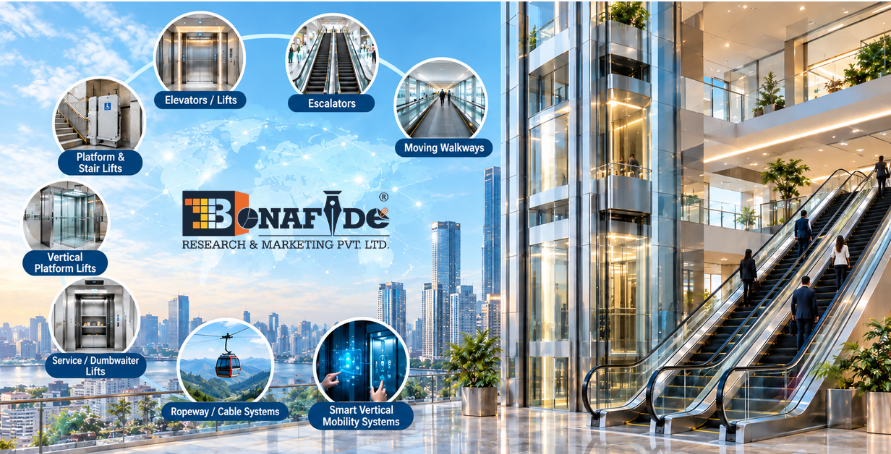
conveyor transport device for transporting people, consisting of individual, linked steps that move up or down on tracks, which keep the treads horizontal. The escalator system is not nearly as good as an
elevator at lifting people dozens of stories, but it is much better at moving people a short distance. This is because of the escalator's high loading rate. Elevators are much more popular than the escalator and the moving walkways, which are still gaining acceptance. The Escalators and Elevators market comprises three main segments including new installation, modernization and maintenance & repair. Due to the global financial crisis, the new equipment market weakened during 2009.
According to the report, "Global Elevator & Escalator Market Overview, 2024-29" published by Bonafide research, the market was valued at around USD 94.32 billion, which is anticipated to reach nearly USD 134.2 billion by 2029. Low-rise buildings whose compositional structure is below 35 meters primarily use hydraulic technology, as it is cheaper to maintain than other modern technologies. The industrial end-user segment will register steady growth in the global elevator market during the projection timeframe. Elevators are utilized for a variety of industrial units including production plants and warehouses for the transportation of goods. Growth in industrial outputs across major Asia Pacific countries will enhance equipment sales in the study timeframe. Growing urbanization and infrastructure projects in China are contributing to the country leading market position. In India, the government initiatives such as National Industrial Corridor Program, Housing for All and Smart City Projects are expected to strengthen the demand for
elevators and escalators in the country over the next five years. Most countries in Latin America and the Caribbean are struggling to escape what economists label 'the middle income trap'. While much if not all of the region has emerged from low income status, neither growth nor productivity has increased sufficiently to enable Latin America to narrow the gap separating it from the world's most developed economies. This have restricted the market share of the region to below, 5% ever since.
Escalators and moving walkways play a crucial role in high-traffic areas like airports and shopping malls. The escalator segment has been a significant contributor to market revenue, driven by the demand from commercial infrastructures. Innovations in escalator technology, including energy-efficient designs and enhanced safety features, are becoming increasingly important. The market for moving walkways is also expanding, particularly in transportation hubs, to facilitate the movement of large volumes of people efficiently. The increasing focus on sustainability and energy efficiency is pushing manufacturers to develop eco-friendly
elevator and escalator systems. New installations involve the deployment of elevators and escalators in newly constructed buildings or infrastructure projects. This segment is particularly robust due to the increasing urbanization and the construction of high-rise buildings worldwide. As cities expand, there is a growing demand for efficient vertical transport solutions to accommodate rising populations. For instance, in developing countries like India and China, significant investments in urban infrastructure are driving the need for new installations, with projections indicating a substantial increase in demand through 2032.
Globally, the market has been dominated by four key players: Otis Elevator Company, Schindler Holding Ltd., ThyssenKrupp Elevator AG and KONE Corporation, which together control a major share of the whole market. The growing demand for smart elevators is one of the primary factors that will drive the growth of the escalator and elevator market during the next few years. Owing to the growing need for minimizing the travel time between floors and with the awareness about the need for energy-efficient residential elevators, the recent years witnessed a considerable increase in the need for smart elevators. On the other hand, many countries have some set of rules and regulations that govern the maintenance activities in industry. These regulations drive the industry as they provide certain norms for the maintenance and modernization of the escalators and elevators. Maintenance and modernization (service) sales represent a substantial share of the market. In the emerging markets like Asia, the installed base is fairly new therefore; it does not call for modernization. Moreover, these markets are not bound by certain concrete legislations regulating elevators and escalators.














 We are friendly and approachable, give us a call.