

Top Six Companies Asia Pacific Personal Loan Market
Asia Pacific Personal Loan market is anticipated to grow at more than 18.22% CAGR from 2025 to 2030.


Retail Banking Beyond the Branch: How Digital-First Consumers Are Redefining the Global Market
The global retail banking market is experiencing sustained transformation as households, individuals, and small businesses increasingly seek accessible, affordable, and digitally-enabled financial services. Retail banking encompasses deposit accounts, consumer lending, payment services, wealth management, and insurance distribution delivered through national banks, regional banks, cooperative institutions, digital banks, and non-bank financial providers. Unlike wholesale or investment banking, retail banking is built on high-volume, customer-level relationships where digital engagement, financial inclusion, and operational efficiency determine long-term profitability. The shift from branch-centric to mobile-first banking, the rise of instant payment systems, the expansion of open banking frameworks, and the growing adoption of artificial intelligence are fundamentally reshaping how consumers interact with their banks.
According to the research report, "Global Retail Banking Market Outlook, 2031," published by Bonafide Research, the Global Retail Banking Market was valued at more than USD 2,080 Billion in 2025 and is expected to reach more than USD 2,988 Billion by 2031, growing at a CAGR of 6.39% from 2026 to 2031. The market is projected to expand as household debt rises, digital banking adoption accelerates, instant payment systems scale, and access to consumer credit improves across both developed and emerging economies.
Digital Transformation and Mobile-First Banking: The Primary Driver of Market Expansion
The rapid adoption of digital banking channels represents one of the fundamental factors supporting retail banking market demand. Consumers increasingly expect to manage their finances through mobile applications and online platforms without visiting a branch. In South Korea, mobile banking registrations reached 209 million at the end of 2025. In India, the Unified Payments Interface processed over 228 billion transactions in 2025, a 33% increase over 2024. In Brazil, digital channels now account for 83% of all financial operations. In the United States, 48.3% of banked households use mobile banking as their primary method of account access.
The shift toward digital channels is reshaping the economics of retail banking. Digital transactions cost a fraction of branch-based interactions, enabling banks to serve more customers at lower marginal cost. Digital onboarding has reduced account opening times from days to minutes, and digital lending platforms have accelerated credit decisioning. The competitive pressure from neobanks and fintech platforms is further accelerating this transformation, forcing traditional banks to reduce fees and invest in technology infrastructure that can support rapid innovation.
Regulatory Mandates and National Financial Inclusion Strategies Supporting Adoption
Governments worldwide are implementing national digital banking strategies and regulatory mandates that require accessible banking platforms and interoperable payment systems. The Dodd-Frank Act in the United States establishes comprehensive oversight of retail banking products. The Instant Payments Regulation in Europe requires payment service providers to offer instant credit transfers at no additional cost. India's Unified Payments Interface and the Pradhan Mantri Jan Dhan Yojana have expanded banking access to millions. Brazil's Pix instant payment system and the UAE's AlTareq Open Finance Initiative are driving digital payment adoption across their respective markets.
Financial inclusion remains a central policy objective. According to the World Bank's Global Findex Database, approximately 1.4 billion adults worldwide remain unbanked. The International Monetary Fund estimates that expanding financial inclusion could add up to 0.5 percentage points to annual GDP growth in emerging markets. Governments are responding with digital identity systems, simplified account opening requirements, and mobile money frameworks that enable unbanked populations to access formal financial services.
Rise of Neobanks and Digital-First Competition Transforming the Competitive Landscape
Neobanks and digital-first challengers have emerged as significant competitors, forcing traditional institutions to accelerate digital transformation and reduce fees. In the United States, neobanks captured 40% of all new account openings in 2025. In Brazil, digital banks accounted for 294 million customers at the end of 2025, with Nubank surpassing Bradesco to become the second-largest bank in Brazil by number of customers. In South Korea, KakaoBank, Kbank, and Toss Bank collectively serve over 58 million customers. These digital-native institutions are gaining market share by offering lower fees, higher deposit rates, and frictionless digital onboarding.
Instant Payments and the Shift to Cashless Societies Reshaping Transaction Banking
The infrastructure of retail banking is being rebuilt around instant settlement. India's Unified Payments Interface has been recognised by the IMF as the world's largest real-time payment system, accounting for approximately 49% of global real-time payment transactions. Brazil's Pix processed nearly 80 billion transactions in 2025, with a financial volume exceeding R$35 trillion. These systems are changing consumer behaviour and competitive dynamics. When money moves instantly, the distinction between payment and banking blurs. For banks, real-time payments represent both an opportunity and a threat. The opportunity lies in new revenue streams such as request-to-pay services and instant lending. The threat is disintermediation if the bank's brand becomes invisible.
The Evolving Role of the Branch: From Transactions to Advisory
Despite the digital surge, the branch has not disappeared. More than half of consumers still prefer visiting a branch to open an account or apply for a mortgage. The branch is not dying. It is specialising. Routine transactions have migrated to digital channels. What remains is high-value, high-complexity, and high-trust activity: mortgages, wealth advisory, dispute resolution, and identity verification. The hybrid model is emerging as the winning formula. Consumers want digital convenience for everyday banking and human expertise for consequential decisions. In the United States, the FDIC recorded a net increase of 535 branches in 2025, reversing years of contraction, as banks recognise that physical presence supports digital sales and relationship deepening.
AI and Personalisation: The Next Frontier in Customer Engagement
Artificial intelligence is becoming increasingly central to retail banking strategy. In China, ICBC serves 12 million monthly users of AI solutions. In India, banks are investing in automated underwriting and AI-driven credit decisioning. In South Korea, KB Kookmin Bank's super-app has reached 14 million monthly active users. AI enables banks to deliver personalised financial guidance at scale, identifying customer needs and offering relevant products at the right moment. AI can also improve credit decisioning by incorporating alternative data sources, expanding access to credit for thin-file customers. However, the adoption of AI also raises challenges related to data privacy, algorithmic bias, and regulatory compliance.
Embedded Finance: Banking Where the Consumer Already Is
One of the most significant shifts in retail banking is not happening inside banks at all. It is happening inside e-commerce platforms, ride-hailing apps, and retail loyalty programmes. Embedded finance integrates financial services directly into non-financial platforms. A consumer can access Buy Now, Pay Later at checkout or open a savings pocket within a retail app. The bank becomes infrastructure; the platform owns the customer relationship. If the customer relationship shifts to a non-bank platform, the bank risks becoming a utility. The banks that thrive will be those that either build their own embedded ecosystems or become the preferred infrastructure partner for platforms that do.
Regional Insights: Asia Pacific Leads, Africa and Middle East Accelerate
Asia Pacific represents the largest regional market for retail banking, driven by high savings rates and government-led financial inclusion initiatives. China dominates the regional market, supported by household deposits of approximately 167 trillion yuan. India is a fast-growing market, driven by the Unified Payments Interface. North America represents a major regional market, supported by mature banking infrastructure and high consumer credit penetration. Europe represents a significant regional market, supported by strong regulatory frameworks and widespread adoption of instant payment systems. South America accounts for a growing share, with Brazil dominating through the Pix instant payment system. The Middle East and Africa represent emerging markets with significant growth potential driven by government-led digital payment initiatives.
Competitive Landscape: Scale, Technology, and Customer Experience
The global retail banking market includes large national banks, regional banks, cooperative institutions, digital banks, and fintech platforms. Major companies include JPMorgan Chase, Bank of America, ICBC, HSBC, BNP Paribas, Santander, and other regional and global institutions. Competition is increasingly moving beyond branches and products toward digital convenience, customer experience, and technology. Neobanks and digital-first challengers have demonstrated that new entrants can gain significant market share by offering lower fees and frictionless digital onboarding. Barclays acquired the retail banking operations of Tesco Bank for £600 million in 2024, illustrating the continuing importance of consolidation.
Future Outlook
The global retail banking market is expected to maintain strong growth through 2031 as financial systems continue prioritising digital transformation to address persistent financial inclusion gaps and rising consumer credit demand. Increasing adoption of AI-enabled customer service, expansion of cloud-based banking platforms, and integration with national payment infrastructure will continue transforming the retail banking landscape. The global population aged 60 and older is projected to reach 2.1 billion by 2050, driving sustained demand for wealth management and retirement planning products. With the Global Retail Banking Market projected by Bonafide Research to increase from more than USD 2,080 billion in 2025 to more than USD 2,988 billion by 2031, the industry is expected to remain an important component of the broader financial services market through the forecast period.
See how you can up your career status

Asia Pacific Personal Loan market is anticipated to grow at more than 18.22% CAGR from 2025 to 2030.

Global Prepaid Card Market Outlook, 2030 is projected to reach market size of USD 4475.23 Billion by 2030.

Global Business Process Outsourcing (BPO) Market Outlook, 2030 is projected to reach market size of USD 520.44 Billion by 2030
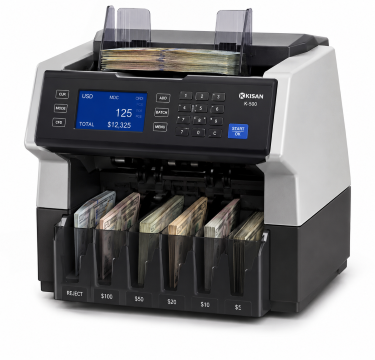
Global Note Sorter Machine Market Outlook, 2031 was valued at more than USD 8.03 Billion in 2025, and expected to reach a market size of more than USD 5.42 Billion by 2031
 We are friendly and approachable, give us a call.