

 By Sunny Keshri
 Top Six Compaies in the Meat Processing Equipment Market
Global Meat Processing Equipment Market Outlook, 2029 is anticipated to cross USD 20 Billion by 2029, increasing from USD 14.24 Billion in 2023.

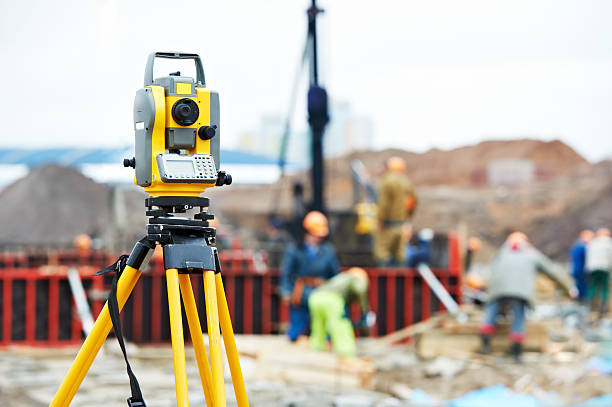
In today's fast changing infrastructure and building environment, land surveying gear is essential for maintaining accuracy, efficiency, and safety in a wide range of sectors. Accurate spatial data is more crucial than ever, spanning environmental monitoring, mining, and urban planning. Traditional surveying equipment is being replaced by more intelligent, quicker, and automated options as projects become larger and more complicated. The market is undergoing a major transition toward sophisticated technologies such as robotic total stations, LiDAR, GPS-enabled systems, and drones, all of which are changing the way land is measured and analyzed. In today's data-driven society, these advancements are essential because they increase accuracy while also saving time and effort. This blog discusses how cutting-edge surveying technology is changing the industry, the increasing need for geospatial intelligence, and the reasons why businesses that invest in modern solutions are gaining a competitive advantage in construction, agriculture, transportation, and other fields. Digital technology is the future of land surveying, and it is already here.
The incorporation of digital and automated technology into traditional surveying techniques is one of the most revolutionary advancements in the market for land surveying tools. Sophisticated systems like robotic total stations, 3D laser scanners, GNSS/GPS receivers, and drones (UAVs) are currently augmenting or replacing instruments that were formerly based only on optical readings and manual measurements. These tools greatly improve accuracy and significantly speed up the process of mapping difficult or vast areas. For instance, drones can gather high-resolution data in minutes by flying over challenging or inaccessible locations, a task that would take days to complete using traditional methods. GPS and GNSS receivers allow surveyors to collect real-time positioning data with centimeter-level accuracy, even in distant areas. The use of geographic information systems (GIS) and cloud-based data platforms, which facilitate smooth data integration, sharing, and analysis, is another crucial aspect of this trend. Surveyors can now process, visualize, and share data on-site or from afar, which speeds up project schedules and fosters better teamwork. Due to the increasing need for faster and more precise data in industries like oil and gas, mining, construction, and city planning, these digital tools are becoming the industry standard. This change is also fueling an increasing need for trained workers who can use sophisticated surveying software and devices, which is further transforming the workforce. The trend clearly indicates a future in which real-time data, connection, and automation are not merely desirable improvements but rather necessary elements of land surveying methods worldwide.
The transition to computerized and automated land survey technology is revolutionizing the sector from the bottom up, altering data use, product creation, and service delivery methods. The industry as a whole has entered a new era of efficiency and precision with the introduction of technologies like drones, GNSS, LiDAR, and robotic systems, which enable surveyors to finish projects faster and with significantly greater accuracy. Particularly beneficial for significant environmental and infrastructure initiatives, this improves output and lowers operating expenses. This translates to shorter turnaround times, more thorough survey results, and fewer mistakes in land evaluation for both customers and end users. There are currently pressure on manufacturers to innovate by consistently improving their products with smarter features, integration capabilities, and user-friendly interfaces. Retailers, in response to this tech-driven shift, are adapting their products and support services to meet the demands of increasingly tech-savvy consumers looking for cutting-edge performance and connection. The move has also created new market categories and increased demand for hybrid and portable solutions. But there are also obstacles to this tendency. The expensive initial cost of sophisticated technology is a significant barrier for small businesses or individual professionals. Additionally, the necessity for technical training is increasing because running contemporary systems calls for a different skill set. Even with these hurdles, the advantages are clear: improvements in speed, safety, and data accuracy are transforming land surveying and placing the sector for long-term expansion and innovation in the coming years.
Despite the variety of land surveying tools on the market today, total stations remain a market leader due to their adaptability, dependability, and accuracy. In contemporary surveying, a total station combines the capabilities of an electronic theodolite and an electronic distance meter (EDM) into a single optical/electronic device. It enables the measurement of slope distances from the instrument to a specific location as well as horizontal and vertical angles. These tools have changed a lot, and today's robotic and motorized total stations provide remote control and automated tracking capabilities that greatly enhance field speed and efficiency. In industries such as infrastructure construction and development, where accuracy and speed are essential, total stations are becoming more and more popular. In addition to topographic surveys, land development, mining, and massive mapping initiatives, this equipment are also vital. The need for dependable, precise, and efficient surveying equipment like total stations grows as urbanization increases and megaprojects keep popping up throughout the world. There are numerous prospects related to technological breakthroughs, such as integration with GPS/GNSS systems, 3D scanning, and digital mapping software. These advancements improve the capabilities of total stations, allowing for real-time data processing and easy integration with GIS and BIM (Building Information Modeling) systems. This provides manufacturers the chance to create intelligent, user-friendly models that have improved automation and connection. Total stations stand out as a fundamental technology in the digital revolution, with the flexibility and capabilities necessary to address the needs of contemporary surveying as more sectors adopt digital transformation.
See how you can up your career status

Global Meat Processing Equipment Market Outlook, 2029 is anticipated to cross USD 20 Billion by 2029, increasing from USD 14.24 Billion in 2023.

The Global Thermo Compression Foaming Market will hit USD 13.93B by 2030, supported by rising demand for lightweight and durable materials.
 We are friendly and approachable, give us a call.