Heat resistant coatings market, protecting critical assets in a high-temperature industrial era
The Global Heat-Resistant Coatings market was valued at more than USD 7.60 Billion in 2025, and expected to reach a market size of more than USD 10.32 Billion by 2031 with the CAGR of 5.36% from 2026-2031.
As industries operate at higher temperatures and increasingly demanding conditions, protecting equipment from heat, oxidation, corrosion, and thermal degradation has become a critical engineering priority. Heat resistant coatings are emerging as an important solution for extending the service life of components exposed to extreme temperatures while maintaining their mechanical and functional performance. From automotive exhaust systems and industrial furnaces to aerospace components, power generation equipment, and chemical processing facilities, these coatings provide a protective barrier that helps reduce surface deterioration and maintenance requirements. The Heat Resistant Coatings Market is gaining momentum as manufacturers increasingly focus on equipment durability, energy efficiency, operational reliability, and longer asset lifecycles.
Higher operating temperatures are creating new demand
Modern industrial equipment is increasingly designed to operate under demanding thermal conditions to improve productivity and energy efficiency. However, higher operating temperatures can accelerate oxidation, corrosion, surface degradation, and material fatigue. Heat resistant coatings help address these challenges by creating protective layers capable of withstanding elevated temperatures while reducing damage to underlying materials. This is particularly important in industries such as automotive, aerospace, metal processing, oil and gas, chemicals, and power generation, where equipment failure can result in significant downtime and financial losses. As manufacturers seek to improve operational reliability, the use of advanced thermal protection coatings is becoming an increasingly important part of equipment design and maintenance strategies.
Automotive electrification is expanding coating applications
The automotive sector represents an important growth area for heat resistant coatings as vehicle architectures continue to evolve. Traditional applications include exhaust systems, engine components, turbochargers, manifolds, and other components exposed to elevated temperatures. However, electrification is creating new opportunities for specialized thermal management solutions. Electric and hybrid vehicles require effective control of heat generated by batteries, electric motors, power electronics, and charging systems. Coatings with thermal protection, insulation, and corrosion-resistant properties can contribute to improved component durability and system reliability. As automakers increase investments in electric and high-performance vehicles, coating manufacturers are developing formulations tailored to the thermal and environmental requirements of next-generation mobility systems.
Advanced materials are raising coating performance
Innovation in coating chemistry is transforming the capabilities of heat resistant products. Silicone-based coatings, epoxy formulations, ceramic coatings, and other advanced systems are being engineered to provide greater thermal stability, adhesion, corrosion resistance, and durability. Ceramic-based technologies are particularly gaining attention for applications requiring resistance to extreme temperatures and thermal cycling. At the same time, manufacturers are developing lightweight and multifunctional coatings that combine heat resistance with protection against chemicals, abrasion, and oxidation. The shift toward high-performance formulations is allowing coatings to perform multiple protective functions simultaneously, creating opportunities for applications that were previously difficult to address with conventional protective materials.
Sustainability is influencing product development
Environmental regulations and corporate sustainability commitments are also influencing the evolution of the Heat Resistant Coatings Market. Coating manufacturers are increasingly focusing on formulations with lower volatile organic compound (VOC) emissions, improved application efficiency, longer service life, and reduced environmental impact. Water-based and other environmentally preferable coating technologies are gaining attention as industries seek alternatives that comply with increasingly stringent environmental standards. Longer-lasting coatings can also contribute to sustainability by reducing the frequency of maintenance, replacement, and material consumption over an asset's lifecycle.
Asia-Pacific offers significant growth opportunities
Asia-Pacific is expected to remain a major growth region for heat resistant coatings, supported by rapid industrialization, expanding automotive manufacturing, infrastructure development, and increasing investments in power generation and industrial processing. China, India, Japan, and South Korea are important markets due to their large manufacturing bases and growing demand for high-performance industrial materials. North America and Europe continue to represent significant markets, supported by advanced aerospace and automotive industries, established chemical and energy sectors, and increasing emphasis on equipment efficiency and environmental compliance. Across regions, the modernization of industrial infrastructure is creating opportunities for coating manufacturers to provide advanced thermal protection solutions.
The future of the Heat Resistant Coatings Market will be shaped by the convergence of high-performance materials, industrial efficiency, electrification, and sustainability. As equipment is required to operate under increasingly demanding thermal conditions, manufacturers will continue developing coatings that deliver higher temperature resistance, improved durability, and multifunctional protection. The next generation of heat resistant coatings is expected to focus on advanced ceramic technologies, environmentally responsible formulations, improved surface engineering, and application-specific solutions. As industries seek to extend asset lifecycles while reducing maintenance costs and environmental impact, heat resistant coatings will remain an important technology for protecting critical equipment and supporting more efficient industrial operations.



 By Priyanka Makwana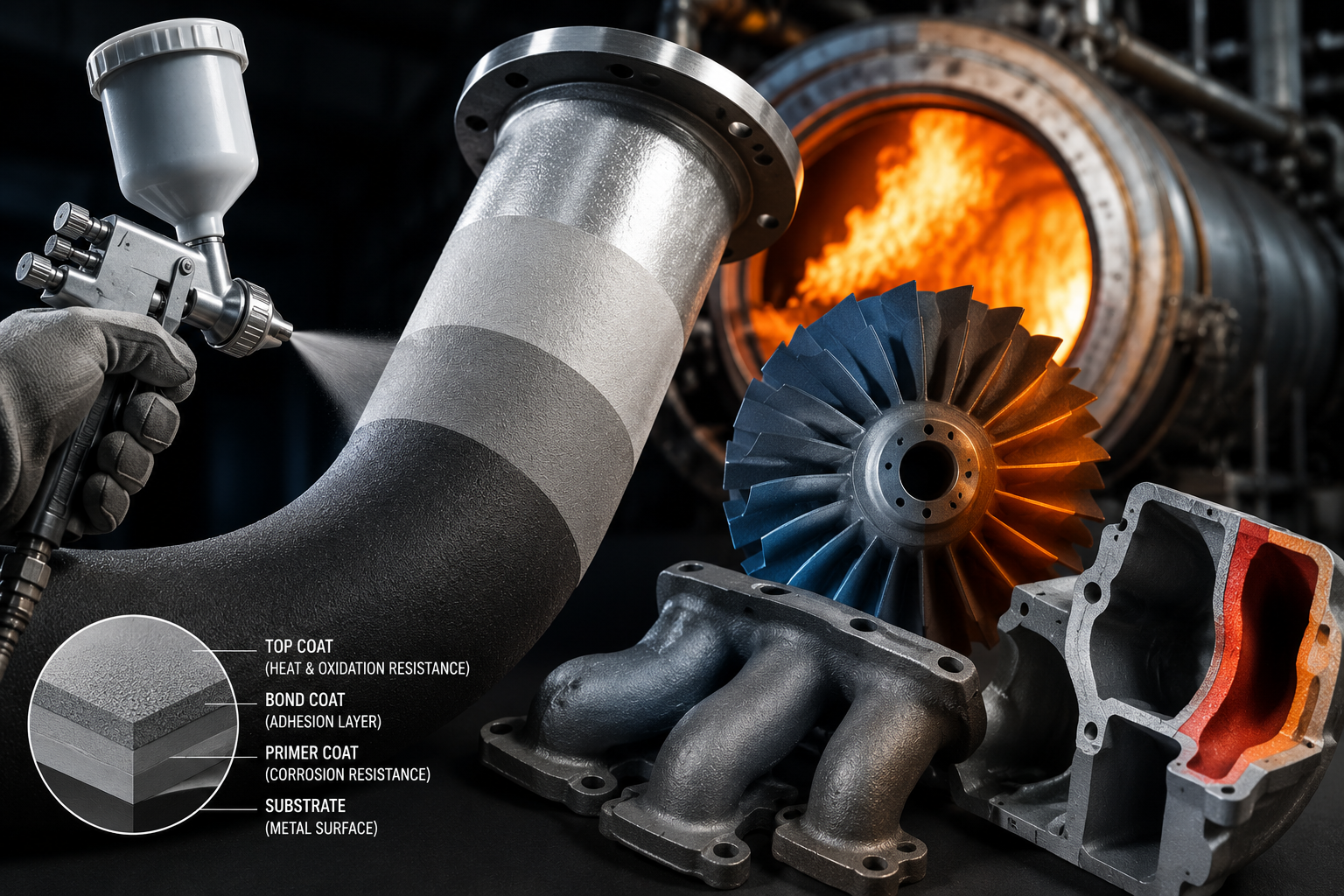


 We are friendly and approachable, give us a call.