

 By Anuj Mulhar
 Transforming businesses with modern document management solutions
The global document management system market will grow from USD 8.70 Billion in 2024 to USD 17.88 billion by 2030 at a 13.02% CAGR.

Introduction
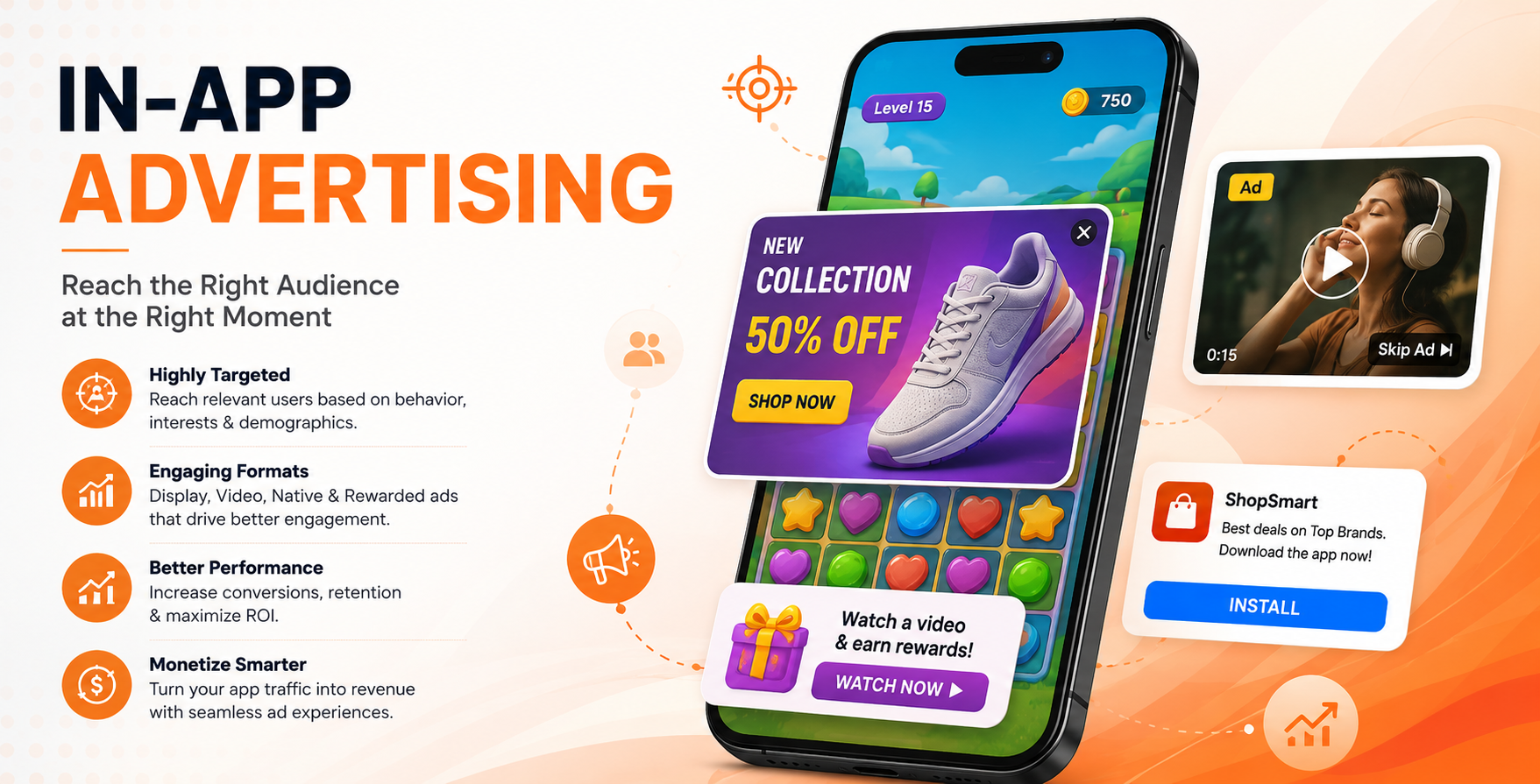
Mobile apps have become the primary gateway to the digital world. Consumers now spend over four hours daily on mobile devices, with the vast majority of that time within apps rather than mobile web browsers. This behavioral shift has transformed in-app advertising into one of the most dynamic and lucrative sectors in digital marketing. No longer just banner ads and pop-ups, the industry now encompasses immersive video ads, rewarded ads, playable ads, and programmatic buying powered by artificial intelligence.
The Global In-App Advertising Market is growing rapidly, driven by increasing smartphone penetration, mobile app usage, and the shift from traditional media to digital channels. Industry estimates indicate that mobile advertising spending continues to grow at a sustained pace, with in-app advertising capturing a significant and growing share. This article explores the current landscape, key trends, emerging technologies, growth drivers, challenges, and future opportunities in this evolving market.
Why In-App Advertising Matters
According to the research report "Global In App Advertising Market Outlook, 2031," published by Bonafide Research, the Global In App Advertising market was valued at more than USD 230.18 Billion in 2025, and expected to reach a market size of more than USD 529.73 Billion by 2031 with the CAGR of 15.29% from 2026-2031. In-app advertising matters because it connects brands with consumers where they spend the most time. Apps provide richer, more immersive environments for advertising than mobile web browsers, leveraging device capabilities such as touch, motion sensors, gyroscopes, and cameras. This interactivity drives higher engagement and conversion rates. In-app ads consistently outperform mobile web ads in terms of click-through rates, viewability, and return on ad spend.
For publishers, in-app advertising enables the freemium business model, offering free app access monetized through ads. For advertisers, it provides precise targeting, measurable results, and scalable reach. This symbiotic ecosystem supports millions of developers worldwide and has fueled the mobile app economy's rapid growth.
Market Overview
The Global In-App Advertising Market encompasses display banners, interstitial ads, rewarded video ads, native ads, playable ads, offerwall ads, and audio ads. The market is characterized by significant seasonal and vertical variations, with retail and e-commerce seeing substantial activity during holiday seasons and mobile gaming advertising remaining relatively consistent throughout the year.
The market is dominated by a few major players, including Google, Meta, and specialized ad networks. Programmatic advertising has become the dominant transaction method, accounting for a growing share of digital ad spending. Real-time bidding enables efficient allocation of budgets, increased transparency, and improved measurement capabilities.
Key Trends
Programmatic Advertising: Automation has transformed in-app inventory buying, with real-time bidding, private marketplaces, and programmatic guaranteed deals becoming standard. This efficiency maximizes publisher revenue and advertiser effectiveness.
AI-Powered Optimization: Artificial intelligence enables predictive analytics, audience targeting, creative optimization, and fraud detection. Machine learning algorithms continuously refine strategies, dramatically improving campaign performance.
Privacy-First Advertising: Apple's ATT, GDPR, and CCPA have reshaped targeting strategies. The industry is pivoting to contextual targeting, first-party data, and privacy-preserving technologies.
Mobile Gaming Advertising: Rewarded video, playable ads, and offerwall ads dominate mobile gaming monetization. This segment is one of the most significant drivers of in-app ad spend.
Retail Media Growth: Retailers leverage first-party data and massive app audiences to offer targeted advertising, connecting ads directly to purchase intent.
Video Advertising: Short-form video ads have become the dominant format, driven by apps like TikTok and Instagram. Rewarded and shoppable video ads are particularly effective.
Contextual Targeting: With privacy restrictions limiting user-level targeting, contextual targeting is experiencing a resurgence, using AI-powered semantic analysis for precise placements.
Cross-Platform Advertising: Advertisers increasingly adopt omnichannel strategies integrating in-app, mobile web, desktop, connected TV, and digital out-of-home channels.
In-App Bidding: Multi-demand source bidding increases competition, improves fill rates, and drives higher yields for publishers.
Sustainability: Environmental considerations are gaining traction, with advertisers evaluating carbon footprints and seeking sustainable alternatives.
Emerging Technologies
Artificial Intelligence: AI powers predictive analytics, dynamic creative optimization, fraud detection, and automated campaign management, fundamentally improving performance and efficiency.
5G Technology: Higher bandwidth, lower latency, and improved connectivity enable richer ad experiences, faster loading times, and more interactive formats.
Augmented Reality: AR advertising enables virtual product try-ons and immersive brand experiences, gaining traction in retail, automotive, and beauty industries.
Contextual AI: Next-generation contextual AI analyzes app content and user behavior patterns for precise targeting without relying on personal data.
Blockchain: Blockchain technology is being explored for enhancing transparency and combating ad fraud through immutable transaction ledgers.
Edge Computing: Real-time ad personalization on user devices reduces latency, improves performance, and provides privacy benefits by keeping data on the device.
Generative AI: AI tools enable rapid creation of thousands of ad variations optimized for specific audiences and contexts, significantly improving ad relevance.
Real-Time Personalization: Advanced algorithms deliver personalized ad experiences based on user behavior, location, and contextual signals.
AI's Transformative Role
Artificial intelligence has become the backbone of modern in-app advertising. In audience targeting, AI algorithms analyze behavioral data to identify potential customers with remarkable accuracy. In creative optimization, generative AI produces thousands of ad variations tailored to different audiences. Predictive capabilities enable proactive budget optimization and issue identification. Fraud detection models identify invalid clicks and non-human traffic in real time. Hyper-personalization delivers highly relevant ad experiences, driving higher engagement and improved campaign performance.
Mobile Gaming Advertising
Mobile gaming represents a substantial portion of in-app ad spend. Rewarded video ads offer players in-game currency in exchange for watching ads, creating a positive user experience. Playable ads allow users to try games before downloading, driving higher conversion rates. Offerwall ads provide a choice-based monetization model with the highest engagement. Specialized ad networks, mediation platforms, and programmatic demand sources serve game developers' unique needs. Balancing monetization with user experience is a key challenge, requiring data-driven optimization strategies.
Retail Media and In-App Advertising
Retail media networks within apps enable brands to target shoppers based on purchase history, browsing behavior, and product preferences. This first-party data signals commercial intent, making ads highly effective at driving conversions. In-app retail advertising includes product recommendations, sponsored listings, display banners, video ads, and interactive product showcases. Mobile commerce growth has accelerated retail media's importance, with retailers investing significantly in advertising technology infrastructure.
Programmatic Advertising Evolution
Programmatic advertising has revolutionized in-app inventory buying. Real-time bidding enables advertisers to bid for impressions in milliseconds. Private marketplaces offer access to premium inventory through invitation-only auctions. Programmatic guaranteed deals provide direct, automated transactions at fixed prices. The ecosystem includes DSPs, SSPs, and ad exchanges facilitating transactions. Programmatic adoption is driving increased transparency, measurement, and accountability in in-app advertising.
Privacy Regulations and Cookieless Future
Apple's ATT framework requires explicit user permission for tracking, with a majority of iOS users opting out. GDPR and CCPA provide consumers with rights regarding personal data. The industry is shifting to first-party data, contextual targeting, AI-powered alternatives, and privacy-preserving technologies. SKAdNetwork provides privacy-compliant attribution. Google's Privacy Sandbox is developing technologies for interest-based advertising without third-party cookies. Unified ID solutions are being developed to balance targeting effectiveness with privacy protection.
Regional Analysis
North America: The largest in-app advertising market, driven by high mobile penetration, advanced ad technology infrastructure, and substantial advertiser spending. The US and Canada lead in innovation and adoption.
Europe: A mature market with strong programmatic adoption, but subject to strict privacy regulations including GDPR. The UK, Germany, and France are key markets.
Asia-Pacific: The fastest-growing region, fueled by massive mobile user bases in China, India, and Southeast Asia, coupled with rapidly expanding digital economies. Mobile gaming and e-commerce drive significant demand.
South America: An emerging market with growing mobile adoption and increasing digital ad spending. Brazil and Argentina are key markets.
Middle East & Africa: A developing market with strong growth potential driven by increasing smartphone penetration and digital infrastructure investment. UAE, Saudi Arabia, and South Africa are key markets.
Competitive Landscape
The market is dominated by Google and Meta, leveraging extensive user data and reach across apps and platforms. However, the landscape is fragmenting as specialized platforms emerge. Mobile gaming ad networks address specific audience needs. Retail media networks are increasingly important. AdTech providers enable programmatic buying, targeting, measurement, and optimization. Privacy-focused solutions and contextual targeting platforms are gaining traction.
Key Players: Google, Meta, Unity Technologies, AppLovin, ironSource, Digital Turbine, Vungle, Moloco, Liftoff, InMobi.
Future Outlook
The Global In-App Advertising Market is expected to continue its strong growth trajectory. Artificial intelligence will play an increasingly central role, enabling hyper-personalization, predictive analytics, and automated optimization. The transition to a privacy-first advertising ecosystem will continue, driving innovation in first-party data strategies, contextual targeting, and privacy-preserving technologies. Mobile gaming advertising will continue its strong growth with innovative ad formats and targeting. Retail media networks will become increasingly important, creating substantial opportunities for retailers, brands, and AdTech providers. Omnichannel advertising will become the norm, with integrated solutions enabling consistent messaging across all touchpoints.
Investment Opportunities
The Global In-App Advertising Market presents significant investment opportunities across the value chain. AdTech platforms enabling programmatic advertising, targeting, measurement, and optimization have strong growth prospects. AI-powered solutions for targeting, creative optimization, and fraud detection are particularly attractive. Mobile gaming advertising platforms specializing in gaming audiences offer compelling opportunities. Retail media technology providers will benefit from retail media network growth. Contextual targeting solutions providing privacy-compliant alternatives are expected to see strong demand. First-party data solutions and customer data platforms are essential for navigating the cookieless future.
See how you can up your career status

The global document management system market will grow from USD 8.70 Billion in 2024 to USD 17.88 billion by 2030 at a 13.02% CAGR.

Global Conversational AI Market is expected to reach a market size of more than USD 43.21 Billion by 2030 with the CAGR of 21.93% from 2025-2030.

Global Customer Data Platform Market is projected to explode from $9.36 billion in 2025 to a staggering $44.60 billion by 2031 - boasting a massive 30.49% CAGR.
 We are friendly and approachable, give us a call.